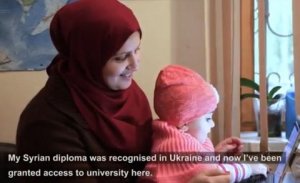
Meet Marva from Syria, a dental technician updating her skills to find a similar job in Kyiv, Ukraine and Slava from Belarus, a lift installer in Helsinki, Finland. What do they share in common? They are both young migrants benefiting from inclusive systems that recognise their skills and offer access to further training.
Vocational education and training may be the best game in town when it comes to economic growth and social inclusion, but, as everyone knows, you have to pay to play.
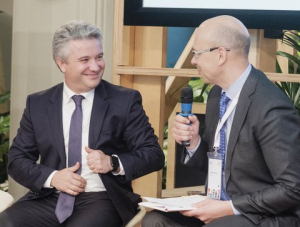
Skills are the stepping stone for economic, social and personal growth. To further explore the EU policy framework and how it can enhance the ETF's work with countries bordering Europe and beyond, a high-level ‘Exchange of Views’ was held in Turin on 14 June.
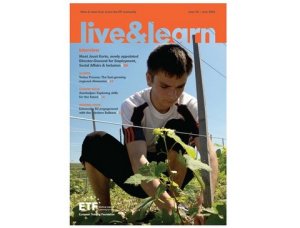
Joost Korte, newly appointed Director-General for Employment, Social Affairs and Inclusion, visits the ETF offices in Turin, Italy, where he takes up his position as Chair of the Governing Board.
Robotics, environmental technology, public health management – the diversity of interesting jobs and career advancement opportunities with a Level 5 qualification is extensive.
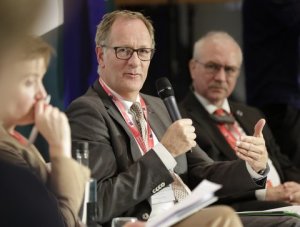
As the only EU Agency involved directly in external relations, the European Training Foundation is taking an active role at the European Development Days (EDDs) – the ‘Davos for development’ organised by the European Commission.
‘When it comes to anticipating future trends and skills needs, we tell the schools what is happening, not the other way around,’ says Jules van Well, from CBL, an employers’ organisation representing food retailers and wholesalers in the Netherlands.
The ETF is organising a conference in Turin on 21-22 November 2018, entitled 'Skills for the future: managing transition' to explore how developing and transition countries can respond to the challenges of current global trends from a skills perspective.
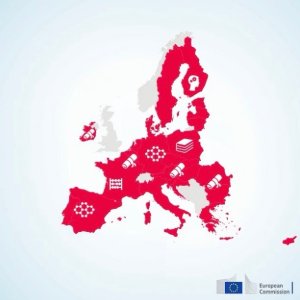
The European Commission is advancing work to build a European Education Area by 2025, reinforce the cultural dimension of the European Union and bolster youth participation, with a new set of measures, including a new Youth Strategy and a new Agenda for Culture.