‘When it comes to anticipating future trends and skills needs, we tell the schools what is happening, not the other way around,’ says Jules van Well, from CBL, an employers’ organisation representing food retailers and wholesalers in the Netherlands.
The ETF is organising a conference in Turin on 21-22 November 2018, entitled 'Skills for the future: managing transition' to explore how developing and transition countries can respond to the challenges of current global trends from a skills perspective.
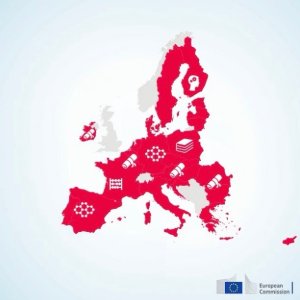
The European Commission is advancing work to build a European Education Area by 2025, reinforce the cultural dimension of the European Union and bolster youth participation, with a new set of measures, including a new Youth Strategy and a new Agenda for Culture.
In the fast-changing world of work, investing in skills, education and training is a top priority. European Training Foundation experts join policymakers, EU officials and other high-level delegates in the Nakhchivan Autonomous Republic to discuss the future of skills and vocational education on 1 May.
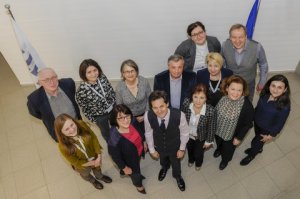
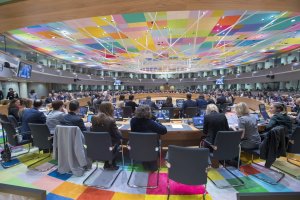
In order to boost employability through training, the Directors General for Vocational Education and Training from EU Member States gathered in Sofia for a discussion chaired by the Bulgarian Presidency on how to improve knowledge of employment prospects of graduates from vocational education.
"The whole is greater than the sum of its parts,” according to the Gestalt psychology, but coordinated and transparent mechanisms are necessary to make it work.
Modernising education is a priority in Moldova, with a focus on curricular reform and a new National Qualifications Framework (NQF). The new law to establish a NQF was adoptedd in late 2017.
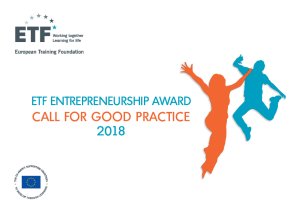
Developing an entrepreneurial mindset is a focus of the EU's drive to build more competitive and employable economies. The European Training Foundation is seeking case studies from vocational education and training providers in the ETF partner countries who are promoting entrepreneurship as a key competence.
The 4th industrial revolution is transforming and disrupting almost every human sphere of operation and influence. From a policy perspective, what impact is this having on skills and lifelong learning? Professor Juan Carlos De Martin explored these questions and much more during a recent visit to the ETF.
On the 25 March 1957, inspired by a dream of a peaceful, common future, the EU's founding members embarked on an ambitious journey of European integration with the signing of the Treaties of Rome.
At today's Employment, Social Policy and Consumers Council, Member States reached an agreement on a European Framework for Quality and Effective Apprenticeships.