Automatic translation into Arabic is available for this page.Translate this page
Publications
This catalogue contains all ETF publications available to download, including studies on our partner countries, corporate publications and statutory documents. All publications are free of charge.
Flexicurity is a comprehensive approach to designing labour market policies. It has been developed to address in a balanced way both the needs of enterprises for a flexible labour force – to enable them to adapt to changing economic conditions and become or remain competitive; and the needs of workers for protection against labour market risks and for secure transitions between jobs or other situations. This report explores the applicability of the flexicurity approach in Turkey in the framework of the country's accession to the European Union.
The present paper has been elaborated jointly with key Egyptian stakeholders and is based on a study design that included desk research, data exchange with partner institutions, focus group discussions held in Egypt in March and April 2010, a workshop to discuss the first draft held in Cairo in June 2010, and a final workshop held in Cairo on 19th October 2010 to present the findings.
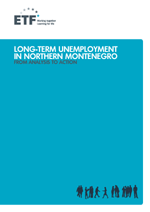
This report focuses on the long-term unemployment situation in Kolasin, Plav and Rozaje, three northern municipalities identified by the Montenegrin Ministry of Labour and Social Welfare. The study collected relevant data, analysed recent developments and future perspectives, and reflected on the economic and social factors contributing to the persistence of unemployment and its damaging effects on individual employability, economic performance and social cohesion in the region. It also looked at cross-cutting themes that have an impact on more than one field, including issues related to gender and certain groups particularly at risk for long-term unemployment, such as ethnic minorities and older workers. The report makes a number of recommendations for both short-term corrective measures to enhance local employment and broader long-term policies.