
Towards labour market integration of refugees in Turkey
Early recognition of qualifications and skills can support refugees’ integration into the labour market in Turkey. ‘It is [therefore] a matter of common sense and solidarity to make as much as possible use of the qualifications and skills of refugees,’ emphasises Mirjam de Jong, ETF specialist in qualifications systems.
The ETF, the Turkish national authorities, the European Bank for Reconstruction and Development (EBRD), and the International Labour Organisation (ILO) have joined forces to identify ways to better use the country’s validation of informal and non-formal learning system for refugees and hosting community.
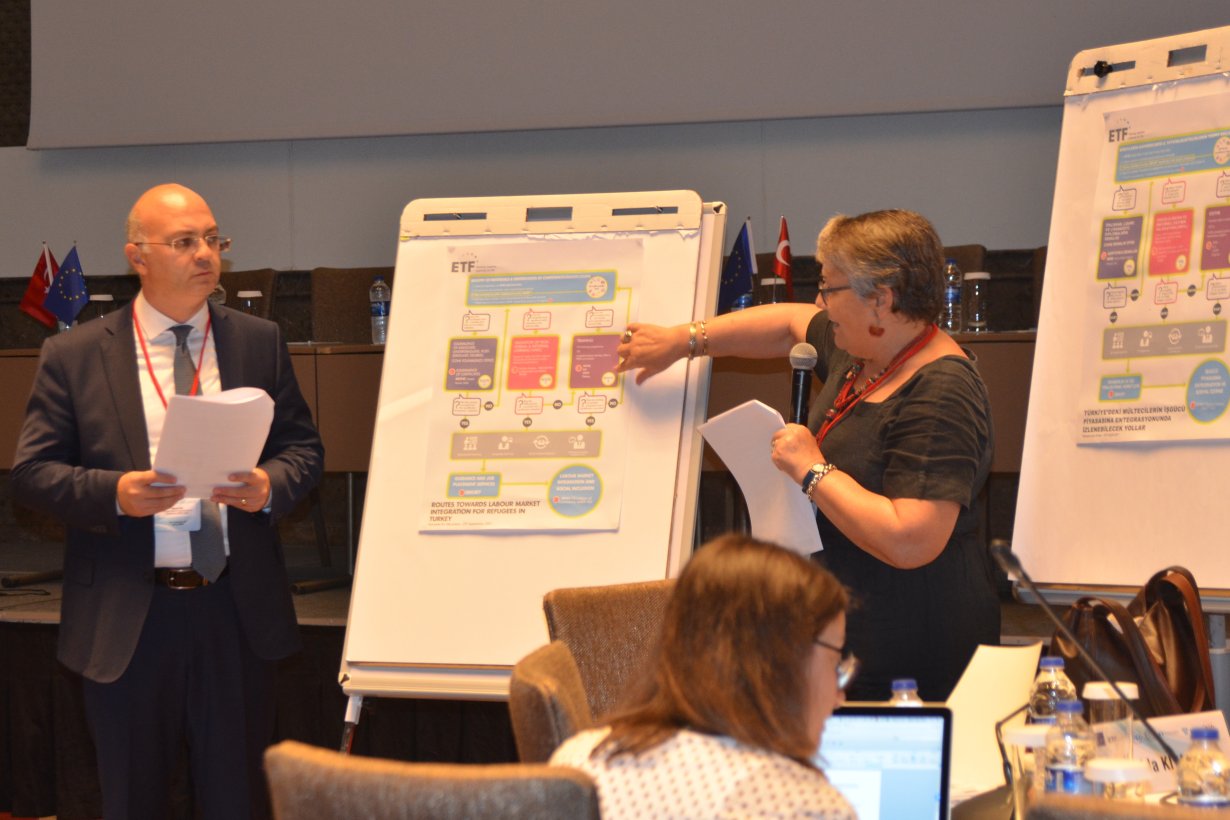
To help coordinate activities in this field, the ETF qualifications team has developed a flowchart to visualise the routes towards labour market integration. It has been adapted to the Turkish situation and was presented at a high-level conference in Adana on 21 September. The flowchart exemplifies the institutional roles and tasks of various actors and reveals possible overlaps and gaps in the process of refugees’ labour market integration.
The conference brought together a wide range of stakeholders from 50 institutions working on the integration of Syrian refugees into the labour market in Turkey. In welcoming the participants, Mustafa Çolakoğlu, Ministry of National Education’s Deputy Undersecretary, claimed: ‘Turkey has a culture of immigrants. We see them as becoming part of the Turkish society.’
Michaela Šojdrová, Member of the European Parliament, added: ‘Turkey has taken the right path of integration of refugees into the labour market through work permits and validation and access to new skills and education.’
However, work remains to be done to enhance refugees’ skills. While referring to current progress in refugees’ employability in Turkey, the Vocational Qualifications Authority’s President, Adem Ceylan, claimed: ‘We do not fully benefit from refugees’ skills.’
The ETF flowchart may help identify new ways to make refugees’ skills better match the needs of the country’s labour market. The ETF believes that this easy-to-use tool can help coordinate joint efforts and enhance efficiency to improve the employability of Syrian refugees in Turkey.
The flowchart is available in English and Turkish, see the attachments in the top right corner of the page. More information on the conference’s main conclusions to come soon in a follow-up report.
Did you like this article? If you would like to be notified when new content like this is published, subscribe to receive our email alerts.