
Skills keep the Trans-Caspian Corridor moving: the ETF and international partners meet in Ashgabat
Deputy ministers from five Central Asian countries, EU institutions, development banks and industry met in the Turkmen capital to ask what workforce a regional transport corridor needs, and how to build it together.
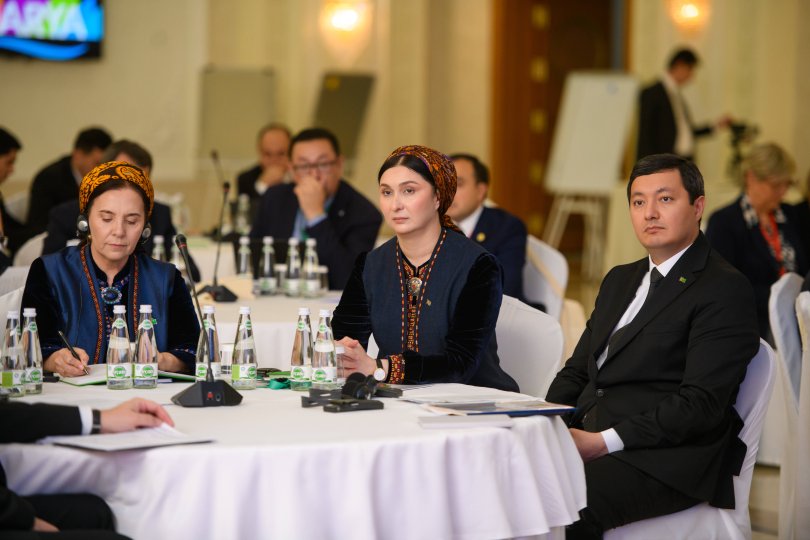
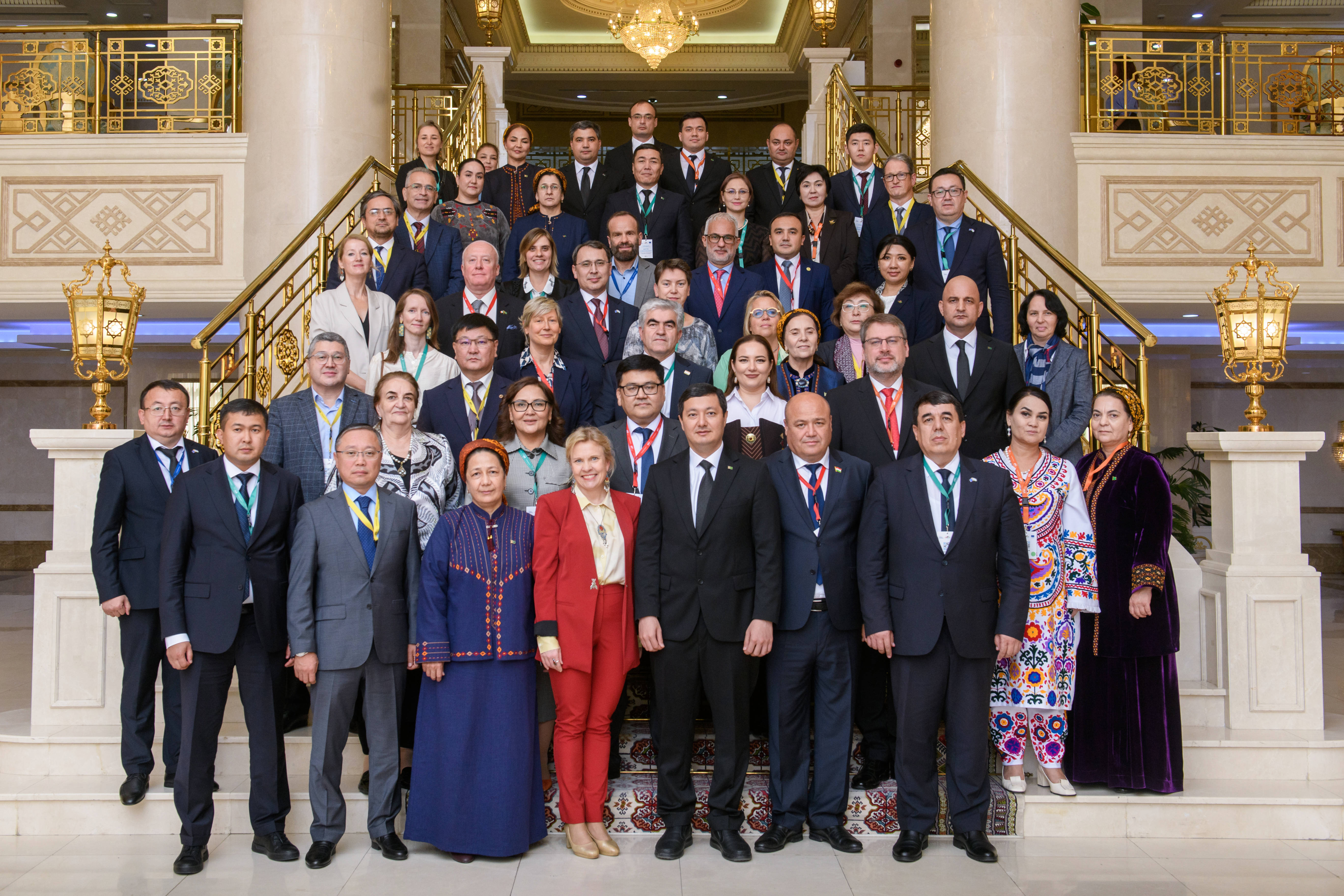
The fifth DARYA High-Level Group meeting, held in Ashgabat on 13-14 October, brought together deputy ministers of Education and Labour from Kazakhstan, Kyrgyzstan, Tajikistan, Turkmenistan and Uzbekistan. They were joined by representatives of the European Commission (DG INTPA), the European External Action Service, EU Delegations and Member States, the European Bank for Reconstruction and Development (EBRD), employers and training providers.
DARYA is the EU-funded regional initiative implemented by the European Training Foundation (ETF), with a €10 million budget from 2022 to 2027. This year’s meeting, hosted by Turkmenistan, looked at the skills dimension of the Trans-Caspian Transport Corridor (TCTC).
The topic follows the investments made in this priority sector for the region. Corridors are being planned and financed across the region, including under the EU’s Global Gateway strategy, and someone has to run them. “Infrastructure and economic investment succeed when they are matched by skills,” said ETF Director Pilvi Torsti, who named regional cooperation as DARYA’s biggest achievement.
A corridor made of people
The same idea came back in almost every speech. EU Special Representative for Central Asia Eduards Stiprais noted that connectivity is usually described through roads, ports and railways, but “a modern transport corridor needs people to maintain it and develop business and services around it.” Turkmenistan’s Deputy Minister of Foreign Affairs Myahri Bashimova stressed that effective logistics depends on trained and skilled workers. Deputy Minister of Labour and Social Protection Halbibi Tachjanova described the human dimension as “not an additive one, but an essential one.”
EU Ambassador to Turkmenistan Luc Devigne tied skills to investment. Investments compete with one another, he said, and a skilled workforce helps a country win them. Fabienne Van Den Eede of DG INTPA presented Global Gateway as a way of “investing in connections, between people, between countries, between partners,” and explained that the EU works through international banks and the private sector rather than financing projects directly. Eric Livny, head of the EBRD Office in Turkmenistan, explained why a development bank takes an interest in skills: according to him, a market economy needs trained specialists in every field, and the Bank looks for improvements in inclusion and connectivity in each project it finances.
Deputy Minister of Education Azat Atayev underlined that the corridor is “not a national programme, but a regional platform” connecting Central Asia with the EU. For Turkmenistan, he said, this means knowing the demand for training, making skills comparable across borders and working with employers, an approach participants saw first-hand at a vocational construction school on the first evening.
“Infrastructure development really requires up-to-date skills provision and qualifications development,” said Georgios Zisimos, Head of the Human Capital Development Policy Advice Unit at the ETF. “We cannot look at these two dimensions separately.”
Three priorities, set by the countries themselves
Day two moved from principles to detail. Katarina Lukacova, ETF Country Liaison for Turkmenistan, presented a study that uses technology and patent trend analysis to anticipate skills needs in residential energy efficiency in Kazakhstan and Tajikistan. “DARYA encourages countries to look at skills needs in key sectors together, starting from data rather than assumptions,” she said. “The study shows how this can work in practice, and the regional roadmap is the natural next step.”
ETF’s expert Eva Jansova, moderated the first thematic session, on labour market monitoring and employer needs. Employers described the gaps they see: digital skills, specialised technical profiles, and experienced staff for cross-border transport, where a single mistake can block a whole shipment. Kyrgyzstan presented its digital platform for monitoring employers’ demand. Jansova later presented a mapping of skills providers in transport and logistics, using the port of Aktau as a case.
The second session, facilitated by ETF’s Christine Hemschemeier with Nadezda Solodjankina, looked at new approaches to skills provision and partnerships. Uzbekistan described the role of sectoral skills councils, and the Dutch training centre Noorderpoort presented the Hydrogen Valley Campus Europe ecosystem.
Solodjankina and DARYA governance expert Kakhaber Eradze then facilitated the work on the regional skills roadmap for transport and logistics. The countries named what they want to start by 2028:
- a regional qualifications framework for transport and logistics, with recognition and validation of non-formal learning;
- shared labour market analytics, moving towards a regional digital platform and a skills database;
- a pilot in the profession of international truck driver, built on mapping, peer learning and cross-border recognition of skills.
Participants also called for sectoral councils, expert groups and further peer exchange with the European Union. Solodjankina welcomed the fact that these proposals came from the countries themselves.
After Ashgabat: a foundation, not an end point
The meeting closed with the Ashgabat policy messages, which will feed into upcoming EU-Central Asia connectivity and investment fora. Speakers agreed that DARYA is the base for what comes next. As EUSR for Central Asia Eduard Stiprais put it, the aim is to see people trained today become highly qualified professionals, “sharing expertise with each other and growing together,” for a more resilient and connected region.
For the ETF, that means staying the course. “In work like DARYA, we look for long-term, sustainable impact, and we trust the institutional and individual commitment behind it,” said Torsti. The ETF will keep drawing on its decades of experience in the region, in qualifications, skills provision, labour market analysis and partnerships between education and business, to support the countries as they turn the roadmap into practice.
Did you like this article? If you would like to be notified when new content like this is published, subscribe to receive our email alerts.