
The Global Symposium: Partnership for Excellence – TGTA and the Promise of TVET
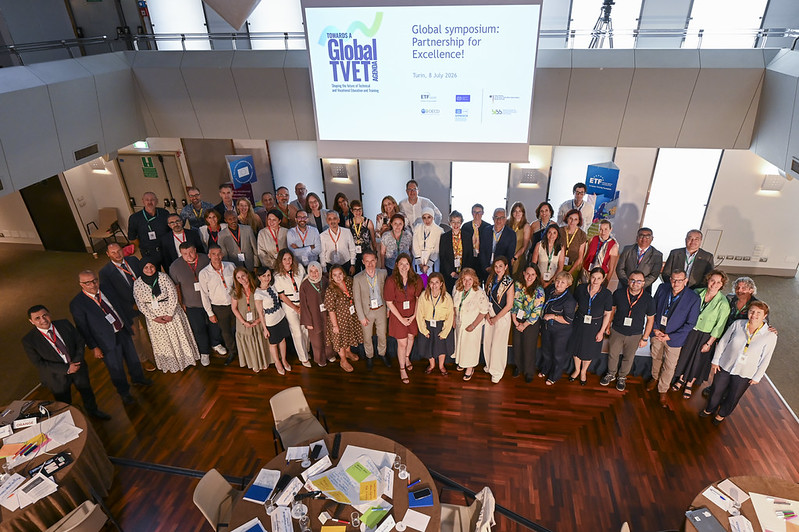
Recently, the European Training Foundation (ETF) hosted the Global Symposium: Partnership for Excellence at the NH Torino Centro hotel in Turin.
The event was part of the ongoing Towards a Global TVET Agenda (TGTA) initiative, funded by the German Federal Ministry for Education, Family Affairs, Senior Citizens, Women and Youth (BMBFSFJ) and implemented by the German Federal Institute for Vocational Education and Training (BIBB), with contributions from the ETF, ILO, OECD and UNESCO-UNEVOC, as well as WorldSkills as an associated partner.
61 participants from four different continents and 24 countries (from Peru to Rwanda, Spain to Jordan) took part – a reflection of the growing interest in vocational excellence. The symposium exemplified, first hand, the importance of collaboration between policymakers, practitioners, experts, and partners in shaping this crucial policy domain.
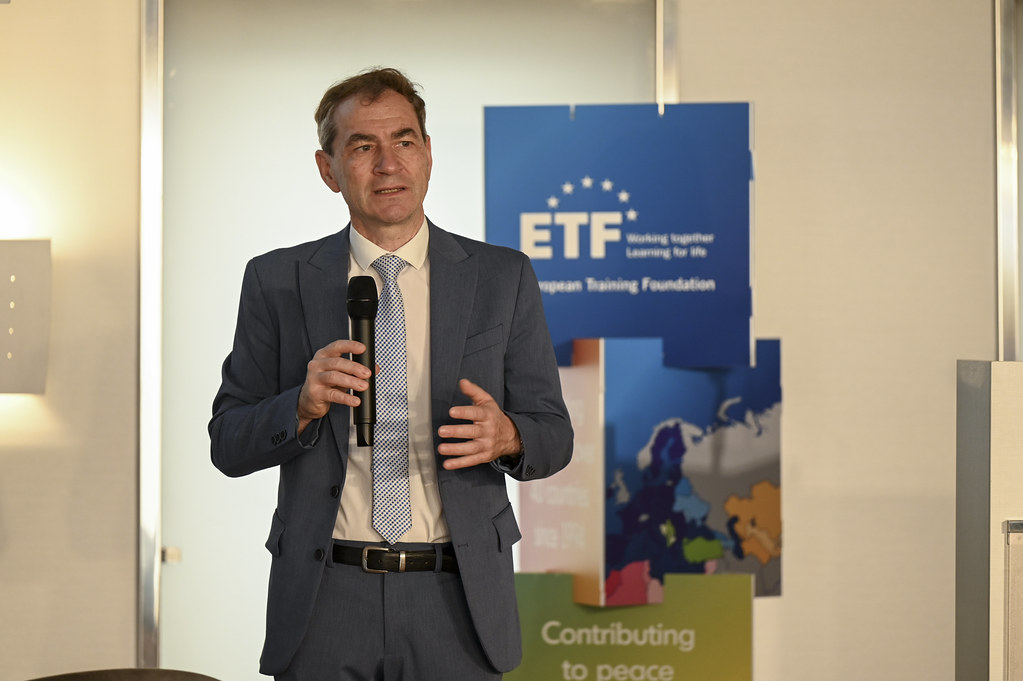
Welcoming participants, Pilvi Torsti, Director of the ETF, set the tone for the day ahead, with words of encouragement and some cautionary remarks. Speaking to a conference room filled with attendees, each possessing their own rich and valuable VET experience, she echoed commonly held sentiments – namely, how vocational education is about building inclusive systems that are both open and responsive to labour markets, societies and citizens themselves.
A shared perception was present among those present on the day, which Oliver Diehl, Assistant Head of Division at BMBFSFJ (the German Federal Ministry for Education, Family Affairs, Senior Citizens, Women and Youth), reflected in his opening comments. Speaking to stubbornly persistent inequalities in education, he reasserted vocational education’s transformative “potential for social inclusion”, and how technical and vocational education and training (TVET) needed to strive for greater inclusiveness for all; the local population, migrants and refugees alike. Various themes covered throughout the day later reaffirmed this prevailing sentiment.
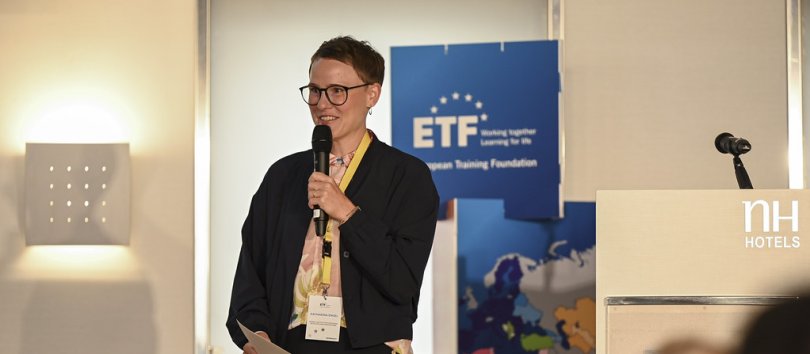
With such ambitions in mind, TGTA fundamentally acts a platform to bring various organisations together, creating a network of mutual support and benefit. Speaking to this broader purpose in her opening address, Katharina Engel, TGTA Team Lead at BIBB (the German Federal Institute for Vocational Education and Training), outlined the initiative’s strategic objectives:
- to position TVET as a global policy priority;
- to help advance global research and evidence in this field;
- to promote synergies among TGTA partners.
Landscape Mapping
Presenting the ETF’s landscape mapping of different Centres of Vocational Excellence (CoVEs), Experts Monika Auzinger and Jolien van Uden took to the stage that morning. They showcased findings from this ongoing study, which looks into the diverse approaches to the establishment of CoVEs around the world, and will continue until September 2026. Using the mapping data, the pair demonstrated how emerging trends, differences, enabling factors and gaps has already been identified across 13 CoVEs worldwide, at different stages of maturity (from South Africa and Australia to Rwanda and further afield). By the end of September, 20 CoVEs will be covered under the mapping.
“There is no single definition of excellence,” said van Uden, speaking of the findings thus far, “but many different forms, and many different approaches. There are sectoral approaches, regional approaches, cluster and beacon approaches.”
This diversity is very much reflected in the data, which identifies how CoVEs cooperate with public and private stakeholders, how they nurture training innovation, how they are governed and funded, how they interact with stakeholders, and how they are embedded within existing VET frameworks and wider policies. Though still in progress, the study illustrates how many CoVEs face similar issues, with peer learning around VET policy presented as an appropriate way to tackle them.
Speaking to Egypt’s experience on the matter, Mohamed Abdelrahman Hassan, Advisor at the national Ministry of Education, outlined the public-private partnership (PPP) model in operation across Egypt’s applied technology schools, emphasising the importance of shared ownership.
“Public-private partnerships do not succeed simply because they are signed,” Hassan stated. “They succeed because they are owned by all partners. Government, industry, education providers and development partners must work together from design to implementation, not as separate stakeholders, but as one skills ecosystem.”
Indeed, while models may differ across national contexts, this collaborative sentiment and pooling of resources seemingly generates consensus and holds true for all.
Production Units
Beyond CoVEs’ governance and management, different work-based learning models within educational contexts were also explored. Increasingly, students run campus-based cottage industries like bakeries, breweries or production workshops, facilitated by educational institutions themselves. “Production units”, as they are known in the context of VET, typically combine educational learning, actual production and the imperatives of commercial viability.
As part of an exposé led by ETF Expert Gert-Jan Lindeboom, three main types were outlined:
- Community-based (meeting local needs and boosting social inclusion).
- Market-oriented (generating income based on market relevance).
- Innovation-oriented (integrating applied research by design).
Participants at the event also shared some of their own experiences implementing production units.
The audience heard of one school’s direct engagement and collaboration with the local timber sector, for example. The school in question found itself meeting strong market demand for high-quality furniture from hotels, public institutions and private clients. In another case, a production unit was even described as “an extension of the classroom”, combining real customer orders with hands-on learning opportunities.
The strength of work-based learning is somewhat self-evident: students apply technical skills in real-world settings, enabling them to understand and implement production planning, professional excellence, quality assurance and teamwork.
VET Policy Playbook and Challenge Partnerships
In a later session, the Global Symposium audience was given a rundown of a new ETF-led tool currently in development: the VET Policy Playbook. Online, accessible and interactive, the Playbook aims to provide guidance on the many challenges faced by CoVEs, with its design focusing on three main areas:
- Governance and funding.
- Teaching and learning.
- Cooperation, innovation and internationalisation.
Ultimately, the tool is aimed at policymakers who are in a position to identify a policy issue, understand the consequences of it not being addressed, and – through a variety of resources – explore possible policy responses. It also offers guidelines about identifying success through understanding outcomes.
Once ETF Senior Human Capital Development Expert, Jolien van Uden, had elaborated on its various facets and general utility, discussions turned into collaboration and brainstorming as to how the Playbook might best be rolled and promoted among those who might benefit.
Later, the closely related notion of “challenge partnerships” was introduced in one of the afternoon sessions. The very concept of challenge partnerships is designed to help resolve a common conundrum: policymakers often face similar problems, but they try to solve them separately, without peer insight or support. Challenge partnerships act a means for them to draw on shared resources, experiences and the wider CoVE network, making it easier to compare notes and learn from one another.
At its core, a challenge partnership equates to a focused collaboration around a specific policy or implementation challenge, led by a "challenge owner", which can be a ministry, an agency or a CoVE network. The idea is to frame the challenge, then facilitate support from national and international partners and contributors, who can scan evidence and practice, offer their experience and sectoral knowledge, and help generate policy options or communicate and share results.
Through hybrid meetings (both online and in person), challenge partnerships facilitate context-specific policy options through international peer input, while increasing visibility for a reform agenda. Their goal is to shape transferable policy guidance, thus offering the wider VET community access to concrete cases, a trusted repository of functioning solutions, and opportunities for cross-regional collaboration on TVET reform.
From Findings to Actions
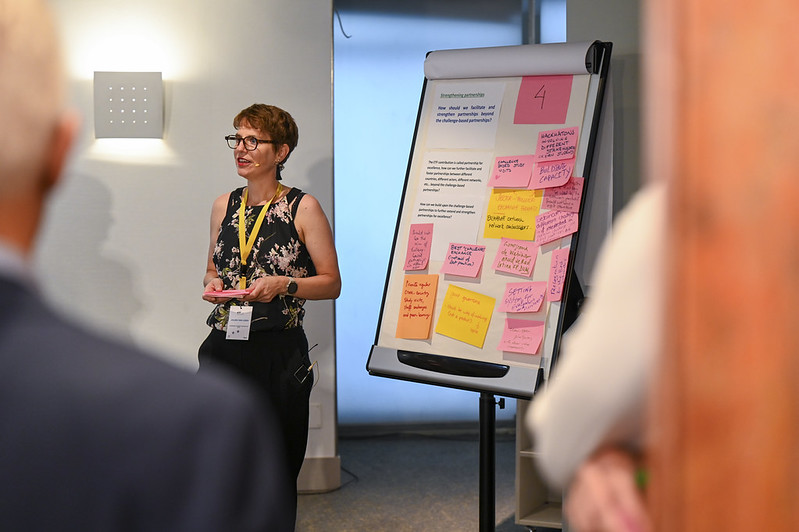
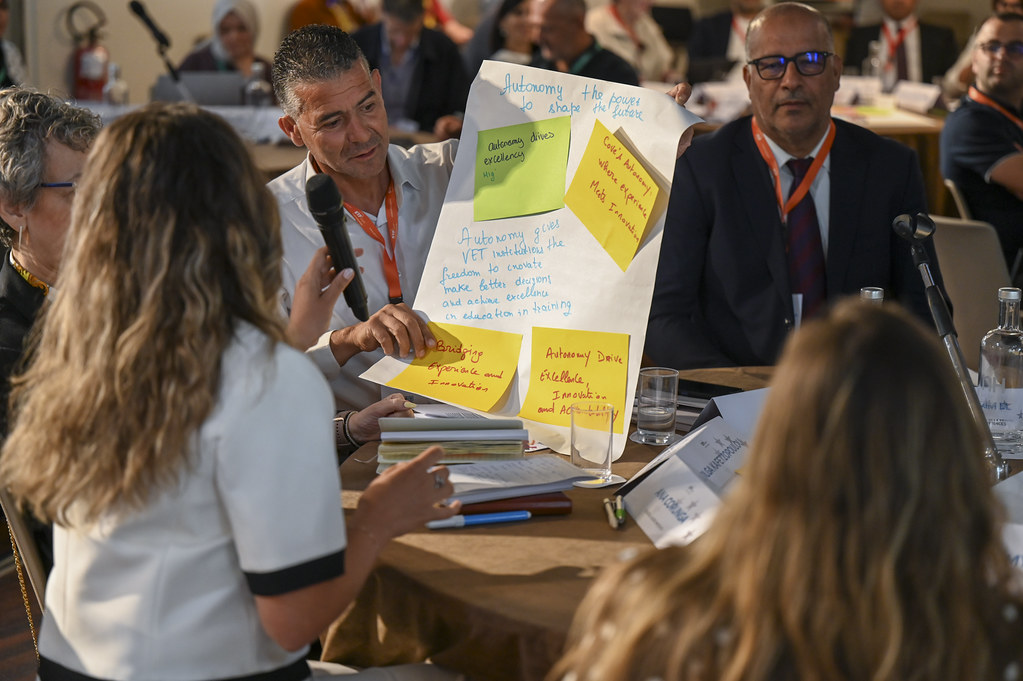
Later in the afternoon, participants were divided into four groups to answer key questions and devise possible solutions.
Among the questions posed were:
- What do we know about enabling environments for CoVEs?
- Which policy challenges should be prioritised globally?
- How should we facilitate and strengthen partnerships?
- What practical models can support excellence in VET institutions?
While discussions around VET can often remain somewhat abstract or theoretical, positive actions can also emerge through long-term collaboration. Strong partnerships between training systems and the labour market – in close cooperation with industry or social partners – is fundamental to CoVEs’ success. One challenge that was raised, however, is the provision of a framework that facilitates coherence between two different cultures, engaging externals not as advisors but as partners, with an equal impression of ownership.
Throughout the discussions, participants also emphasised the importance of visibility to improve the attractiveness of VET as a high-quality pathway to job opportunities. Strong consideration was given to the idea of providing better evidence on what vocational excellence actually delivers. Iván Bornacelly, Policy Analyst and Projects Lead at the OECD Centre for Skills, suggested that “the challenge we face isn’t about better info or data, but translating data so that it can be used by policymakers.”.
His comments on data relevance and applicability echo the objectives of the OECD’s Global TVET Data Report, developed in collaboration with countries, international organisations and experts to strengthen the global evidence base for TVET. This is complemented by the ILO’s work on skills, which was broached by ILO Head of Skills Policy and Governance, Ashwany Aggarwal; namely the Global Skills Policy Guide, the Academy on Skills Development and the Global Skills Forum, which seek to drive effective national skills policies, offer capacity building and help shape global workforce development respectively.
Head of the UNESCO International Centre for Technical and Vocational Education and Training (UNEVOC), Friedrich Huebler, also offered his own account on the centre's initiatives. Among others, UNEVOC has been promoting vocational excellence through a TVET Leadership Programme (now in its 10th year), with the aim of “strengthening leaders to drive institutional reforms”. The centre has also launched its own Global Awards for Innovation in TVET, receiving more than 300 applicants annually, to increase the field’s attractiveness.
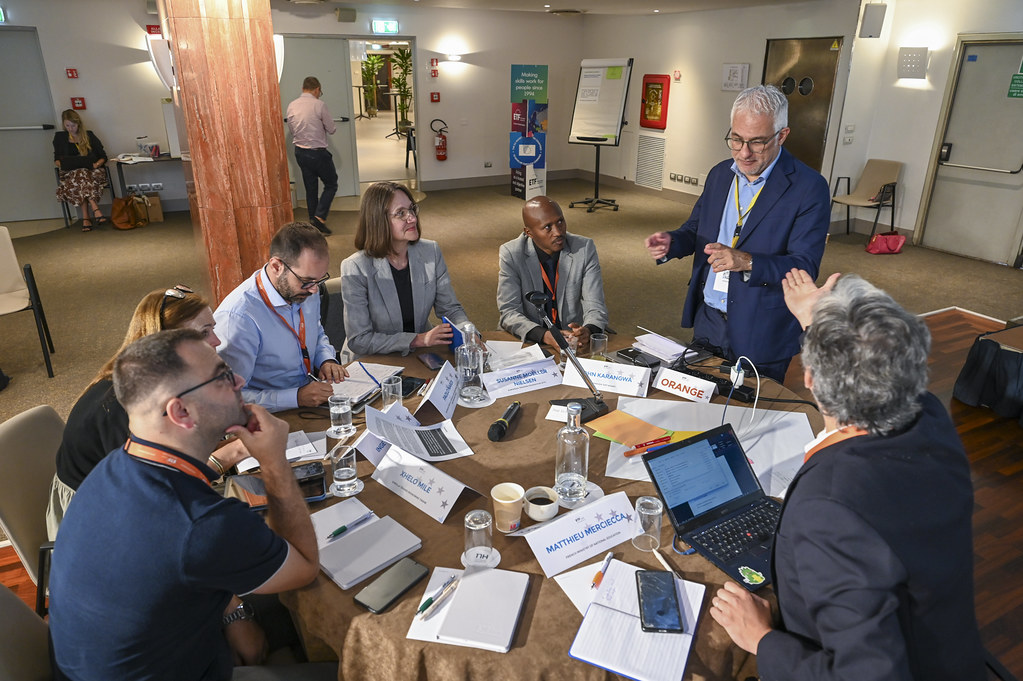
Speaking from a strategic and narrative point of view, Matthieu Merciecca, Head of Unit for Business Education Partnerships at the French Centres of Vocational Excellence (Campus des métiers), mentioned his country’s own experience at national level.
“We need to better develop this VET identity,” said Merciecca, “by leaning on public-private partnerships and sectoral approaches, while conveying the attractiveness of training from a jobs perspective. Our strategy in France has historically been disjointed in this regard, so we need to link up, scale up and pursue optimised synergies.”
Adopting a more cautionary tone, Giulia Meschino, Secretary General of the European Vocational and Training Association (EVTA), also warned against the perils of an emerging “two-speed VET system”, in which some learners are left behind. Discussants in the panel agreed that VET systems need to be useable and transferable, not just visible. There is a risk of elitism if CoVEs are purely focused on their own individual success. Success should be measured by what happens outside CoVEs and their ability to disseminate excellence more broadly.
From Promise to Delivery
In drawing the event to a close, speakers reflected on the ideas behind partnerships. Creating a community of practice and trusted partners was undoubtedly advanced as a key facet of improving efforts towards vocational excellence. In this regard, the event provided a welcome opportunity to connect stakeholders and foster collaboration.
In his closing remarks, Oliver Diehl, Assistant Head of Division at BMBFSFJ (the German Federal Ministry for Education, Family Affairs, Senior Citizens, Women and Youth) reminded us that VET is “a promise to younger generations, enabling them to become someone in society.” He contended that a fresh, common language must be found, offering real positive outcomes. “This is a promise on which we must deliver,” he stated.
Georgios Zisimos, Head of the Human Capital Development Policy Advice Unit at the ETF, then concluded proceedings by unpicking the first word of TGTA. “Towards” he said, means “something is moving forwards”. “Excellence”, he continued, “means commitment – it means you commit to progressing towards fulfilling that promise”.
Did you like this article? If you would like to be notified when new content like this is published, subscribe to receive our email alerts.