
Financing equity and access to quality education: what Portugal’s reforms offer to Eastern Partnership countries
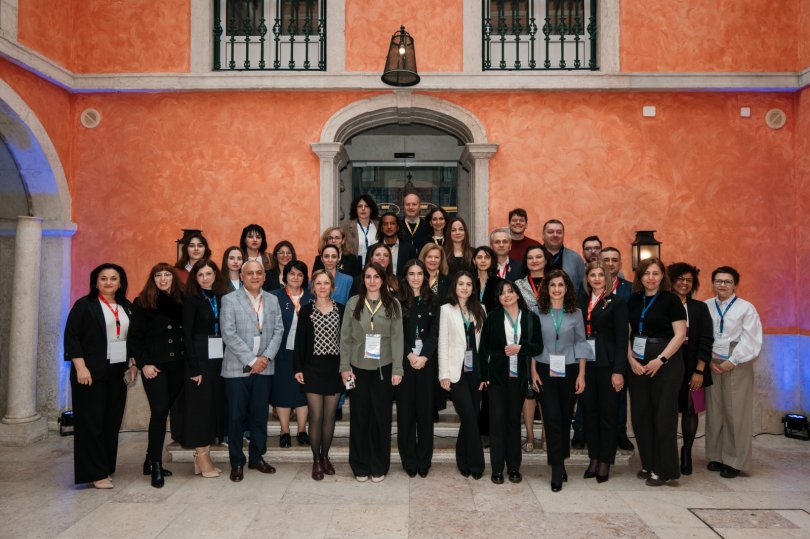
From 9 to 13 March 2026, Lisbon hosted a peer learning week on a subject that lies at the heart of education reform: how financing instruments shape access, equity and quality in education. Organised under the EU-funded Support to Education Reforms and Skills (SER) programme, implemented by the European Training Foundation (ETF), the event brought together almost 40 participants from Armenia, Azerbaijan, Georgia, Moldova and Ukraine, alongside Portuguese education authorities.
Over four and a half days, delegations examined how budget choices, allocation formulas, governance arrangements and targeted support measures can either widen or reduce inequalities across education systems. Meetings with the Portuguese Ministry of Education, Research and Innovation and its newly reorganised agencies under a recent organisational reconstruction process, local authorities and school leaders offered participants a practical look at how financing works not only on paper, but in local communities and schools.
For the ETF, the topic is far from marginal. Financing is one of the core dimensions of the SER programme’s Rapid Education Diagnostic (RED) and policy support work.
“Portugal is interesting for financing, as it faced two issues similar to the ones in your countries: how to address equity while managing resource allocation, and decentralisation reforms in education,” said Marie Dorleans, the ETF’s lead expert and RED coordinator, at the opening of the event.
She also stressed the value of exposing partner countries to the diversity of European experiences. “As previous peer learning visits had taken place in Northern Europe, it is important to also explore how things work in a Southern European country,” Dorleans said.
Timo Kuusela, the ETF’s SER Programme Coordinator, framed the discussion in broader terms. Reforms matter, he said, but what matters even more is whether they produce lasting effects.
“Financing is a very important tool in policy,” he noted. “But reforms need, foremost, a long-term vision. Otherwise, you risk undermining your own efforts. In all reforms including financing of education it is critical to assess how they impact the learners at all levels and their access to quality education.”
It was a timely reminder for a region where education systems are often under simultaneous pressure from demographic decline, territorial inequality, fiscal constraints and political expectations for rapid change.
The discussions were framed around the ETF’s Financing Prism, which looks at three key dimensions of education financing: resource mobilisation, resource allocation and governance of the financing chain. In simple terms, the framework examines where funding comes from, how it is distributed across the system and how its use is managed and monitored. While the answers differ across countries, many of the underlying challenges are shared.
Rural schools with small student populations, shortages of qualified teachers, demographic decline, and the tension between efficiency and territorial access were recurring themes from one country to the next.
Presenting her country’s context, Carmo Gomes, Education Reforms Specialist, noted that the Portuguese system has gradually evolved over the decades in response to demographic, territorial and social changes, including growing migration.
“In the 1970s, Portugal was one of the least inclusive systems in Europe,” Gomes said. “In fifty years, we have made a huge transformation, and that matters when we speak about equity and access.” After the Salazar dictatorship, educational exclusion in the country was widespread, and literacy and numeracy levels were dramatically lower than in most of Europe. Since joining the European Union in 1986, the country has gone through a major process of educational expansion and modernisation.
Portuguese officials from the Ministry of Education, and the new Agency for the Management of the Education System (AGSE), also described the ongoing institutional reform of the education administration. The system is moving from a fragmented structure towards a more streamlined architecture centred on fewer organisations and clearer coordination between the Ministry, agencies, municipalities and schools.
The Portuguese case also stood out for its explicit focus on equity and inclusion. Constitutional principles of equal access are translated into a range of support instruments: school meals, transport, learning materials, support staff, and measures targeting vulnerable students and families. At the same time, Portuguese officials, as well as school principals visited during the week, were candid about persistent pressures, including poverty, teacher shortages, ageing staff and uneven territorial realities.
“The aim remains to give an equal basis for everyone,” Gomes said. “That is why decentralisation, social support and the reorganisation of the school network remain such important priorities.”
Education financing challenges, and good practices across the EaP region
This balance between ensuring equitable access to education while managing limited public resources and adapting school systems to demographic and territorial realities is precisely the challenge many Eastern Partnership countries are currently facing.
In Armenia, Tamara Sargsyan, head of the Department for General Education of the Ministry of Education, Science, Culture and Sports, described ongoing reforms combining infrastructure investment and governance changes. Armenia is building or renovating 300 schools and 500 kindergartens while expanding STEM laboratories and teacher incentives.
“There is a lot to learn from the Portuguese experience,” she said, “particularly regarding decentralisation and the role of local authorities”.
In Ukraine, Oleksandra Husak, Director-General for European and Euro-Atlantic Integration at the Ministry of Education and Science, described a system facing unprecedented pressures due to the war. Displacement, security needs and fiscal constraints have added to long-standing structural challenges such as teacher shortages and territorial disparities. At the same time, Ukraine has developed a number of innovative financing tools, including digital education grants delivered through the Diia platform and performance-based funding mechanisms in higher education.
“We are happy to share our flexibility in adapting under very difficult circumstances,” Husak said, adding that Ukraine remains open to learning from other countries facing similar challenges. This underlined how much discussions with Armenian counterparts in a previous SER meeting in Yerevan had already revealed how similar the two countries’ challenges are
Galina Rusu, Secretary General of the Ministry of Education and Research of Moldova, highlighted challenges such as outward migration, teacher shortages and the persistence of small under-populated schools, despite relatively high public spending on education, around 6% of the country's GDP. Moldova is also advancing digitalisation and data-driven policy-making. “Our very North Star is to develop more inclusive financing schemes for the education system," she said.
Eteri Khanjaliashvili, Senior Specialist at the Ministry of Education and Science of Georgia, emphasised the need to balance central coordination with school autonomy.
“I have heard of a lot of challenges similar to ours,” she said, pointing to rural-urban disparities, ageing teachers and difficulties in attracting new professionals. In Georgia, targeted incentives are in place in order to attract teachers to remote and mountainous areas, as well as early retirement programmes designed to renew the teaching workforce and create opportunities for younger professionals.
Jabbar Huseynli, Chief Advisor in the Department of Education Economics at the Ministry of Science and Education of Azerbaijan, highlighted the high cost of maintaining small schools and the need to improve access in rural areas.
“Our main challenges include the inefficiency of the school network, particularly in small schools, and the ageing of the teaching workforce,” he said, noting that the government is increasing teachers’ salaries through performance-based certification. Among the instruments presented was the national Student Education Loan Fund, which provides subsidised loans to support access to higher education, with reduced interest rates for socially vulnerable students and additional incentives linked to academic performance.
From policy discussion to classroom reality
Facing a declining youth population, many small schools, particularly in rural areas, experienced falling enrolment and high dropout rates. In response, Portugal undertook a major restructuring of its school network, consolidating around 2,500 pre-primary, primary and secondary institutions into 809 school clusters.
Each cluster brings together preschool education and all levels of compulsory 12-year schooling within a single organisational structure, including vocational education programmes for both young people and adults. The reform also streamlined governance arrangements: each cluster is led by one director and a core management team, while smaller educational units are overseen by school coordinators.
In Lisbon, participants visited two school clusters in very different neighbourhoods: Parque das Nações, the redeveloped former Expo 1998 area, and Benfica, one of Lisbon’s best-known districts.
The Dinis cluster, located in a more vulnerable neighbourhood, operates across 13 sites and serves more than 2,500 students from 32 nationalities. School leaders stressed that the challenge is not only financial, but also social: integrating diverse student populations and retaining teachers in demanding environments.
In contrast, the Dom Pedro V cluster in Benfica serves around 3,000 students from 29 nationalities in a more affluent area with stronger transport connections and fewer families dependent on subsidies. Schools there have somewhat greater scope to generate additional revenues through services and facilities, for example through the long-standing Portuguese practice of school reprography services.
It was therefore not a contrast of diversity versus homogeneity, but of how similar levels of diversity can produce different financial realities depending on local conditions.
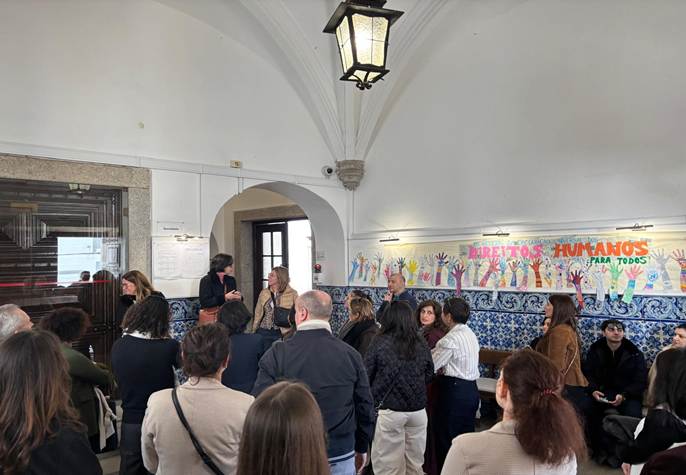
Visits to school clusters in Évora added a regional and rural dimension, showing how municipalities help maintain smaller schools spread across less densely populated areas.
Portugal’s cluster model offers valuable lessons for EaP countries seeking to rationalise extensive school networks. By consolidating schools while maintaining local access, particularly for rural children in the early grades, the model helps ensure more equitable access to education. At the same time, it enables more efficient use of teaching and learning resources and related funding.
Balancing equity, efficiency and access in education systems
The visits also brought back one of the programme’s most persistent themes: the role, as well as the status, of the teaching profession. Across Portugal and the EaP countries, the attractiveness of teaching has become a strategic issue, shaped by salary levels, working conditions, ageing staff, territorial imbalances and the broader social value attached to the profession. Another recurring issue in previous peer learning visits was school network optimisation: how to merge, cluster or support schools in ways that improve quality and efficiency without undermining access, especially in rural areas.
Education financing may sound like a niche topic, but it is in fact where political priorities become operational reality. It is where governments decide whether equity is only a principle, or also a budget line; whether inclusion is only a discourse, or also a transport subsidy, a teacher allowance, a school meal or an extra professional support .
Portugal may not occupy the same symbolic place in global education rankings as some Northern European systems. But that, as Carmo Gomes insisted, is only part of the story.
“The starting point is crucial,” she said. “Investment in education is first of all investment in the country’s economy, growth and social wellbeing: in Portugal, we have clearly seen the long-term benefits of this transformation”.
Improving education systems is not only about reform design, but also about aligning financing mechanisms and resource allocation with a long-term goal of equity, access and quality for all learners.
Through the SER programme, this journey is supported by the exchange of European experience and practical knowledge, helping partner countries advance informed and sustainable education reforms.
Did you like this article? If you would like to be notified when new content like this is published, subscribe to receive our email alerts.