
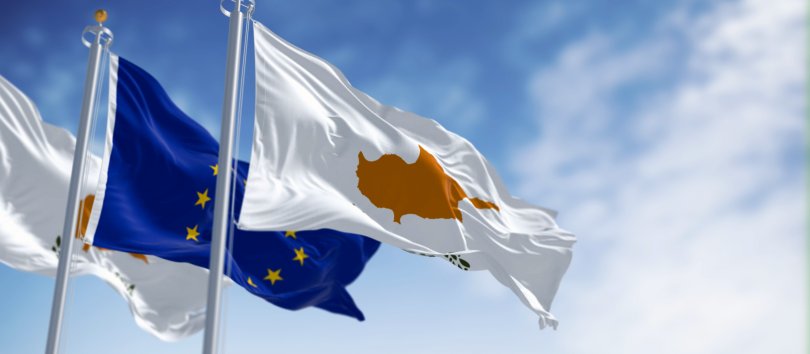
Cyprus takes over the EU Council Presidency: 11 defining moments for skills and human capital
As the Cyprus presidency creates new momentum for Europe’s human capital agenda, in what ways can this shape Europe’s skills, education and labour agenda in 2026?
Europe enters 2026 facing profound geopolitical, economic and technological shifts. Against this backdrop, Cyprus has assumed the Presidency of the Council of the European Union (1 January – 30 June 2026) under the motto “An autonomous Union. Open to the World.”
For the ETF, this presidency arrives at a time where Europe’s competitiveness, resilience, autonomy and social cohesion can be enhanced by its ability to invest in people, strengthen skills ecosystems and build human capital that can adapt to rapid change.
A presidency with a clear human capital dimension
Although the Cyprus presidency’s programme spans a wide range of priorities, from strategic autonomy to global engagement, skills and education will play a central role.
During a high‑level meeting in Nicosia, Roxana Mînzatu, Executive Vice-President and Commissioner for Social Rights and Skills, underlined the presidency’s importance:
“The Cyprus presidency of the Council of the EU can play an important role in promoting education and skills in Europe.”
Cyprus has set out a focused programme for education and training. Priorities include:
- steering the Erasmus+ negotiations within the next Multiannual Financial Framework,
- strengthening teacher development and career pathways,
- promoting a learner‑centred approach to skills aligned with the European Education Area,
- advancing work on VET attractiveness and the integration of new technologies.
Higher education mobility and progress on the Joint European Degree will also feature prominently. This commitment was echoed by Cyprus’s Minister of Education, Sport and Youth, Athena Michaelidou, who emphasised a holistic approach to skills and competences, with a strong focus on teachers and learners:
“We exchanged views on the holistic approach to skills and competences that we are promoting in education, giving priority to teachers and students.”
These statements signal a presidency ready to advance Europe’s skills agenda at a time when it is urgently needed.
A major policy file: the EU’s Human Capital Recommendation
Just weeks before the presidency began, the European Commission proposed a Council Recommendation on Human Capital, calling on Member States to reverse negative trends in basic skills and strengthen lifelong learning systems.
This proposal will be negotiated under the Cyprus Presidency, placing human capital squarely at the centre of the EU policy agenda for the next six months.
For the ETF, this is a natural alignment, given that our mission is to support countries in developing future‑ready skills systems, inclusive education and responsive labour markets.
The Union of Skills: a new European architecture
One of the most significant developments last year was the Commission’s launch of the Union of Skills, which Cyprus seeks to accompany with an action plan to improve basic skills across Europe.
Commissioner Mînzatu stressed the urgency:
“Improving basic skills is not important just for Cyprus — it is a challenge for the entire European Union.”
Cyprus will also participate in a new Erasmus pilot linked to this initiative, reinforcing the presidency’s commitment to practical implementation.
The Ministry of Labour and Social Insurance will contribute through work on three areas: fair employment and social justice, shared responsibility for advancing the Union of Skills, and fair labour mobility across the EU. These themes will shape a dense programme of EPSCO‑related meetings, social‑dialogue events and exchanges with public employment services throughout the semester.
Why human capital matters now more than ever
The challenges facing Europe today — digital transformation, demographic shifts, the green transition and labour shortages — are fundamentally skills challenges.
Human capital is the foundation of:
- innovation and competitiveness
- social inclusion and cohesion
- resilience in times of crisis
- sustainable development
The Cyprus Presidency’s focus on autonomy and openness resonates strongly with the ETF’s work across the EU neighbourhood, where we help partner countries build agile, evidence‑based and people‑centred skills systems.
A new European strategy for vocational training
Vocational education and training (VET) will be a major focus in 2026. Commissioner Mînzatu announced plans for a new European VET strategy, with attention to prestige, attractiveness and inclusiveness:
“Next year we will present an action plan, a strategy on European vocational training. We need to increase the prestige, the attractiveness and the inclusiveness of vocational training.”
A key moment for this agenda will be the Directors‑General for VET (DGVT) meeting in Nicosia on 30–31 March. Discussions will explore the impact of artificial intelligence on VET, new evidence on VET attractiveness from the upcoming Eurobarometer and the role of mobility and internationalisation in strengthening vocational pathways.
Redefining basic skills: adding “citizenship”
A significant policy shift is emerging: the proposal to expand the definition of basic skills to include a foundational citizenship skill.
“Reading, literacy, mathematics, science, digital skills are important, but we need to have a foundational citizenship basic skill.”
In practice, this means recognising that active participation in modern societies may require more than technical competences. Citizenship as a basic skill can also encompass critical thinking, democratic understanding, social responsibility, and the ability to engage constructively with other. This resonates strongly with the ETF’s long‑standing work on transversal competences, civic engagement and 21st‑century skills.
Cyprus’s vision: autonomy through people
The Presidency’s programme stresses that Europe must strengthen its internal capacity to act while remaining open to global cooperation.
This vision depends on investing in people. Autonomy is not only about technology, defence or supply chains — it is about equipping Europe’s citizens with the skills to adapt, innovate and lead.
STEM targets and measurable ambition for Europe’s future
The Commission and the Cyprus Presidency also share a commitment to strengthening STEM pathways. As Commissioner Mînzatu explained:
“We want to have STEM targets so that we measure the ambition… of how many students go towards STEM education pathways.”
This focus on measurable outcomes aligns with the ETF’s expertise in skills intelligence, labour‑market analysis and future skills forecasting.
A presidency that will shape Europe’s education budget
The Cyprus Presidency will oversee negotiations on the next Multiannual Financial Framework, including a proposed 50% increase in the Erasmus budget — from €26 billion to €41 billion.
The ETF International Conference
On 24–25 June, Cyprus will host the ETF’s conference, Skills Partnerships for VET Reforms in the Mediterranean, organised in cooperation with the Ministry of Education, Sport and Youth. The event will explore youth and women’s empowerment, skills ecosystems and vocational excellence, VET reforms for the twin transition and partnerships to address skills mismatch.
During the ETF Governing Board meeting, Cyprus expressed appreciation for this collaboration:
“Your commitment to strengthening skills systems, supporting partner countries and promoting lifelong learning continues to inspire us.”
The ETF’s contribution in 2026
The Cyprus EU Presidency offers a unique opportunity to elevate the conversation on skills, human capital and the future of learning.
As Commissioner Mînzatu highlighted, this is a moment to reinforce Europe’s commitment to education and skills. The ETF stands ready to contribute expertise, evidence and partnerships to ensure that people remain at the heart of Europe’s strategic autonomy.
As the EU’s agency dedicated to human capital development in partner countries, the ETF will:
- support evidence‑based reforms in education and training systems
- strengthen skills intelligence and labour‑market analysis
- promote lifelong learning and digital skills
- facilitate peer learning across EU and neighbouring countries
- contribute expertise to EU policy dialogues, including those shaped by the Cyprus Presidency
Our work complements the EU’s internal efforts by ensuring that Europe’s neighbourhood is also equipped with the skills needed for stability, prosperity and cooperation.
Did you like this article? If you would like to be notified when new content like this is published, subscribe to receive our email alerts.