
COP31: From climate commitments to action – investing in people and skills
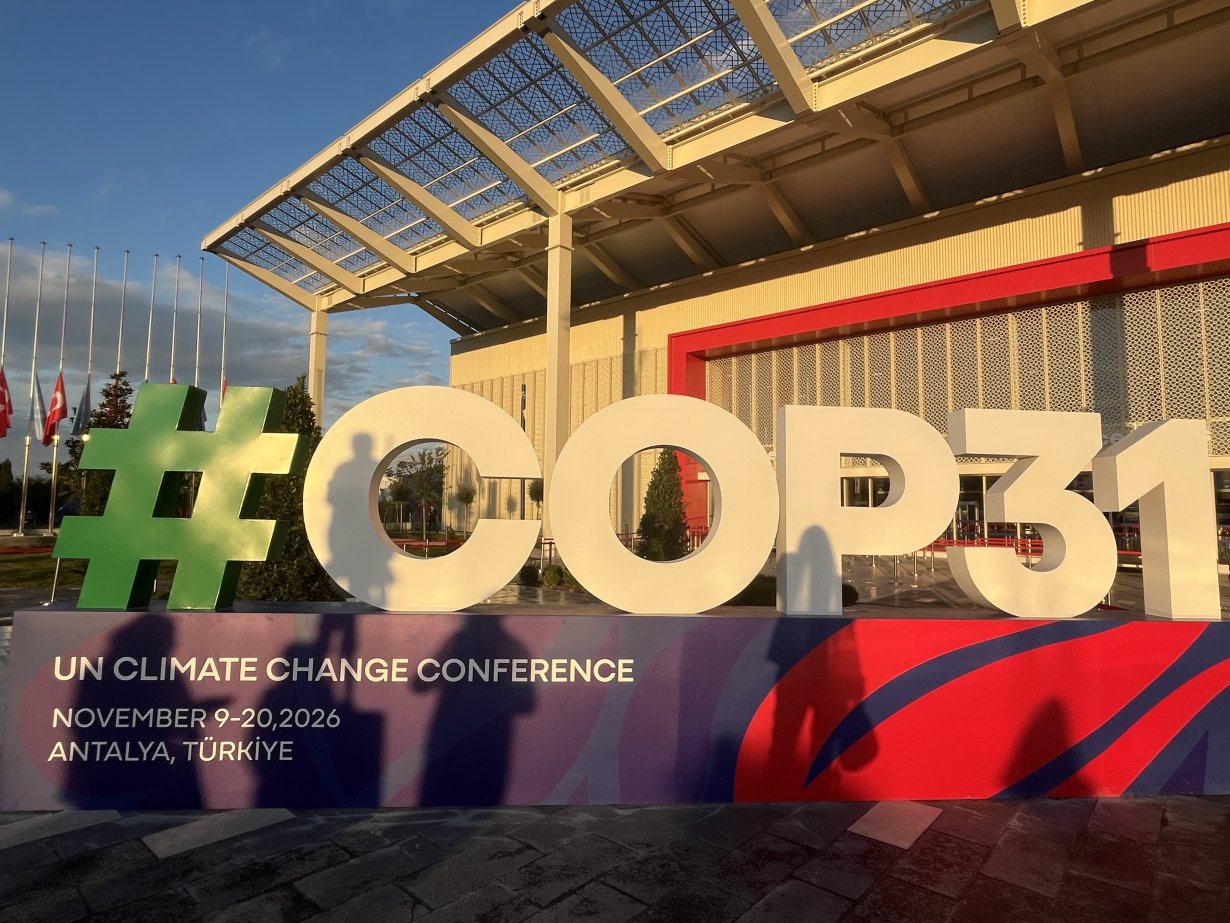
At COP31 in Antalya, the ETF highlighted how skills, education and workforce development are essential for delivering a just and effective climate transition.
From 9 to 20 November 2026, the global climate community gathers in Antalya, Türkiye, for COP31, the 31st United Nations Climate Change Conference.
Bringing together governments, international organisations, businesses and civil society, the summit is focused on turning climate commitments into action through stronger efforts on mitigation, adaptation and climate finance. COP31 also marks the launch of the second Global Stocktake, a three-year process that will assess collective progress towards the goals of the Paris Agreement and help shape the next phase of global climate ambition.
“We want to see the targets we have set in Antalya reflected in people's lives. That is what matters most.” Murat Kurum, COP31 President, said, capturing the ambition of COP31. They also express the challenge facing climate action: turning commitments into changes that people experience in their homes, workplaces and communities.
For the European Training Foundation (ETF), this means ensuring that skills, education and workforce development are part of climate implementation. Beyond new technologies and investment, the transition to climate-neutral and resilient economies depends on people and institutions having the capacity to put change into practice.
Who are the people behind the transition?
There was an evident workforce challenge during the discussions at COP31. The International Energy Agency (IEA) reports that around 60% of energy companies surveyed face labour shortages, particularly in applied technical occupations. Its World Energy Employment 2025 report concludes that “building a pipeline of skilled workers is a strategic priority for energy security”.
Meanwhile, renewable energy employment reached 16.6 million globally in 2024, according to IRENA and the International Labour Organization (ILO). Their joint report highlights that “the human side of renewable energy is still too often overlooked or taken for granted”.
“Climate action happens on the ground. It is in workplaces, businesses and communities that the transition becomes real. This is where people need the skills to introduce new technologies, change working practices and develop new solutions. Connecting climate ambitions with skills development and cooperation between employers, education providers and public authorities is essential to making the transition happen,” says Susanne M. Nielsen, Senior Expert at ETF.
The ETF brought this perspective to discussions at the Just Transition Pavilion, co-hosted by DG EMPL and the ILO, where the focus was on the critical role of skills in supporting a fair and inclusive energy transition. Conversations explored how countries can equip workers for changing occupations, support communities affected by economic restructuring, and ensure that emerging green opportunities are accessible to all.
Participants also discussed the development of an international Just Transition Mechanism, building on the commitment made at COP30. The social dimension of climate action was further highlighted in a COP31 session moderated by Mario Nava, Director-General of the European Commission’s DG Employment, Social Affairs and Inclusion, which examined the EU Social Climate Fund and its role in helping vulnerable households and workers benefit from the transition while mitigating the social impacts of climate policies.
Buildings need people as well as investment
The theme of adaptation and resilience also featured prominently at the launch of Electrify Cities at the EU Pavilion, where discussions highlighted how climate and energy goals can translate into tangible benefits for citizens.
As Dan Jørgensen, European Commissioner for Energy and Housing, noted, the transition is about creating “a home that stays comfortable during a heat wave, an affordable journey to work, a hospital that can run on its own energy supply.” Electrification can play a key role in reducing emissions, strengthening energy security and making cities more resilient, while improving quality of life.
Buildings are an important part of this transformation. As a full member of the Global Alliance for Buildings and Construction (GlobalABC), led by UNEP, the ETF brings a skills and vocational education perspective to the sector’s green transition.
This contribution is reflected in the Antalya Compact for Energy Efficient Buildings, developed by the COP31 Presidency and the GlobalABC secretariat to accelerate energy efficiency, renovation and electrification efforts towards 2035 targets.
Achieving these ambitions will depend on investment in technology, but also on people. A workforce equipped with the right skills is essential to improve building performance, install efficient systems and implement new construction standards.
Through its collaboration with UNEP and UNESCO-UNEVOC, the ETF is helping identify emerging skills needs across the construction value chain. Its report, Accelerating Vocational Excellence in the Construction Sector, highlights the importance of stronger cooperation between training providers, employers and public authorities, underlining that investment in sustainable buildings must go hand in hand with investment in the people who design, build and renovate them.
Greening education and supporting Ukraine's transition
On 14 November, Children, Youth, Education and Skills Day turned the spotlight on a question that often sits on the margins of climate negotiations: how education systems can help societies adapt to a changing planet. At a high-level ministerial meeting on greening education, organised by the COP31 Presidency, UNESCO, the OECD and Türkiye’s Ministry of National Education, policymakers discussed how sustainability can move beyond policy commitments and become part of everyday learning.
Opening the discussion, Yusuf Tekin, Türkiye’s Minister of National Education, presented the country’s efforts to embed climate and sustainability topics across 19 school subjects, alongside initiatives to make schools themselves more sustainable environments. The message was clear: teaching about climate change is not enough if students do not see sustainable practices reflected in their daily lives.
The debate echoed a growing international shift from environmental awareness to practical skills and behaviours. This is also the approach behind ETF’s GRETA – Global Green Skills Network, which promotes the integration of sustainability across vocational education and training institutions, from curricula and teacher development to management practices and cooperation with employers. Rather than treating green skills as a standalone subject, the initiative focuses on embedding sustainability throughout the learning experience, helping prepare learners for the realities of a greener economy.
At the Ukraine Pavilion, discussions on the just transition took on added urgency in the context of the country’s ongoing war. In a session organised by DiXi Group, representatives from the European Bank for Reconstruction and Development (EBRD), GIZ and DTEK examined the future of Ukraine’s energy sector and the workforce challenges linked to its transformation. Alongside the need to rebuild infrastructure and accelerate the green transition, participants highlighted the growing demand for new skills and the severe impact that the full-scale invasion has had on labour availability and workforce development. The discussion also drew attention to the role of the Green Transition Office, implemented by DiXi Group, which supports Ukraine’s Ministry of Economy, Environment and Agriculture in shaping climate and green transition policies.
For Ukraine, reconstruction, energy security, decarbonisation and EU accession are closely connected, and developing the skills needed by employers, communities and public institutions is an essential part of this process.
Investing in people for climate action
The scientific perspective underlying many of the discussions at COP31 was articulated by Johan Rockström, whose work on planetary boundaries provides a framework for understanding the environmental constraints facing economic development. Rather than presenting climate action as a choice between growth and sustainability, his intervention highlighted the need to redesign economic systems so that development takes place within ecological limits.
As countries pursue decarbonisation, industrial transformation and energy security objectives, the question is not only how quickly economies can transition, but also whether workers and communities have the capacity to adapt. In this context, skills emerge not as a secondary consideration, but as a critical factor linking climate ambition with social and economic resilience.
As Pilvi Torsti, Director of ETF, puts it:
“The climate transition will ultimately depend on whether people have the skills and opportunities to make it happen. Investing in human capital must therefore be an integral part of climate investment and policy. This is essential not only for competitiveness and resilience, but also to ensure that the transition creates opportunities for people and leaves no one behind.”