
Equitable skills development: insights from 9th Western Balkans Civil Society Forum
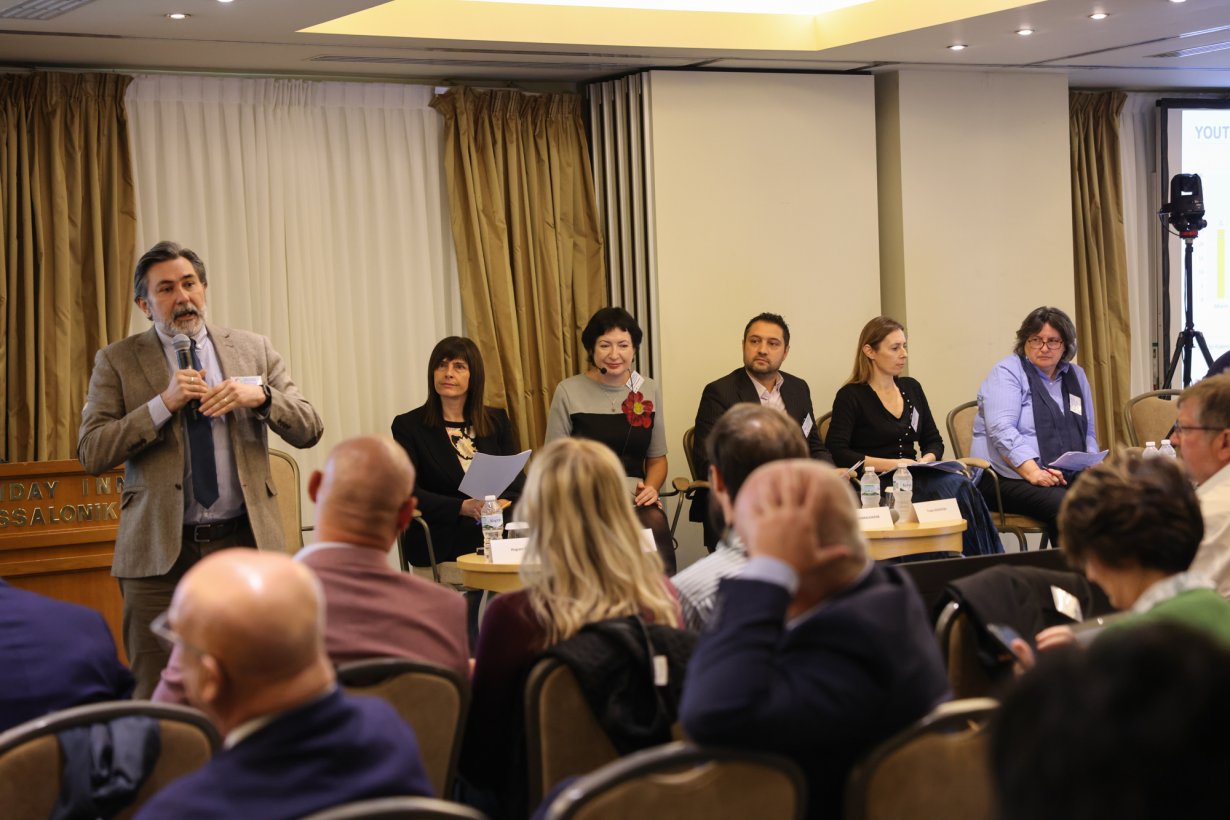
“Lower skilled youth have fewer opportunities for reskilling and upskilling throughout life. Governments should engage in dialogue with civil society organisations to ensure more equitable opportunities for skills development,” said Hugues Moussy, the Head of the ETF’s Systems Performance and Assessment Unit during a panel session at the 9th edition of the Western Balkans Civil Society Forum on 19-20 October 2023 in Thessaloniki, Greece.
The focus of the event, organised by the European Economic and Social Committee (EESC) in cooperation with the European Commission, the European Training Foundation (ETF), the Regional Cooperation Council (RCC) and Cedefop (European Centre for the Development of Vocational Training), was on the role of Civil Society Organisations (CSOs) to ensure that economic, social and political reforms are nested in society for the benefit of everyone.
“Democratic watchdogs that are key for the success of accession negotiations with the European Union” was how Oliver Röpke, the President of the European Economic and Social Council, described CSOs in his opening address.
He was followed by the Vice-President of the European Commission for Democracy and Demography, Dubravka Šuica, who welcomed the EESC’s initiative to include members from the EU’s candidate countries in the advisory work of the institution as momentum grows at European level for the accession of the candidate countries in the region to join the European Union.
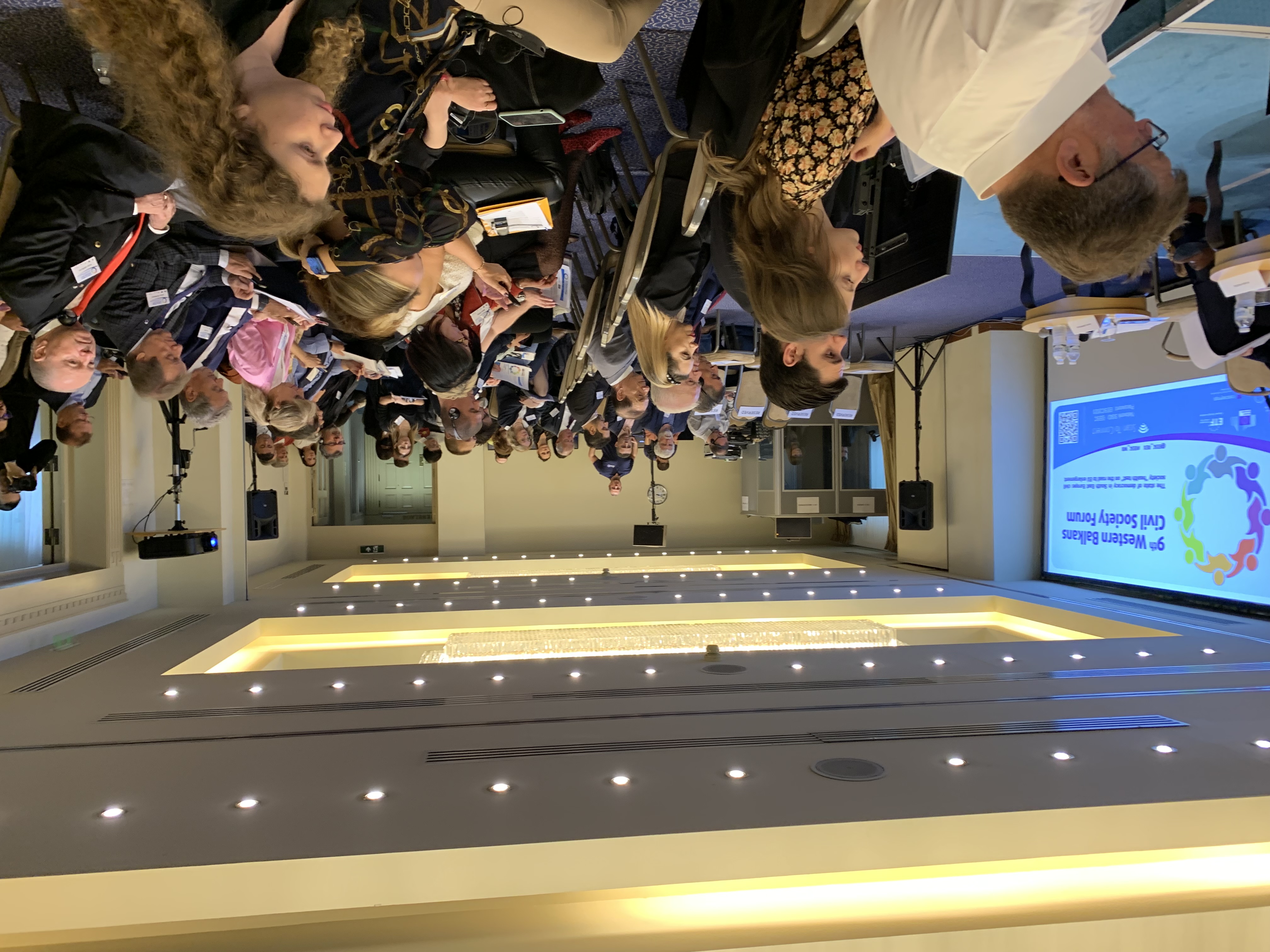 Critical issues in the work of CSOs highlighted by the participants from across the region included their limited consultation with governments, restricted engagement in the monitoring of European policy processes, and access to funding. They called for greater support and safeguarding of civic space.
The education system, youth policy and skills development in the Western Balkans were key themes on the agenda with a further focus on adult education, lifelong learning and vocational education and training to address labour market skills mismatch, equitable opportunities for fostering skills and holistic personal development, as well as improvement of the green and digital skills of the adult population and motivation of employees and the unemployed to receive additional education.
“CSOs are the link between citizens and the realities of public policies,” said Margareta Nikolovska, the ETF’s Governance and Quality Assurance Expert who has worked with CSOs in the region for many years.
“Bringing public authorities and civil society together to focus on youth policy and skills policy is also a trust building exercise,” said Nikolovska.
Funding of CSOs and their access to donor funding was a recurrent issue throughout the event. Nikolovska highlighted that public money for programmes will have allocated funds for CSOs and accessing these funds is very often a practical issue to be resolved rather than a political one.
In the final panel session, the focus was on reskilling and upskilling as part of the European Commission’s Skills Agenda, and the difficulties of outreach within communities.
“CSOs are a necessary compliment to Public Employment Services for ensuring outreach to the wider population and especially vulnerable and marginalised communities and individuals,” said Siria Taurelli, the ETF’s Coordinator of Governance and Quality Assurance.
“Within a lifelong learning perspective, greater effort is needed to reconcile initial and continuing vocational education and training in which career guidance and innovative training provision play a vital role, and public-private-civic partnerships are essential,” concluded Taurelli.
The Declaration adopted at the end of the conference will build towards the European Commission's Enlargement package for the region expected in November and the EU-Western Balkans Summit in December.