

The ETF and TGTA
Towards a Global TVET Agenda (TGTA) is an initiative that brings together leading global and regional organisations to strengthen the attractiveness, quality and innovation of technical and vocational education and training (TVET) systems worldwide.
The initiative is funded by the German Federal Ministry for Education, Family Affairs, Senior Citizens, Women and Youth (BMBFSFJ) and is implemented under the coordination of the Federal Institute for Vocational Education and Training (BIBB).
It supports countries in responding to rapid economic, technological and societal change by promoting cooperation, shared learning and forward‑looking policy action in TVET.
The TGTA is implemented under a collaborative partnership between UNESCO‑UNEVOC, the ILO, the OECD, and the ETF, with WorldSkills International as associated partner.
TGTA is structured around four complementary focus areas:
- Prototyping TVET data reporting
- Partnership for excellence
- Global and regional TVET policy innovations
- Knowledge sharing and global fora
Collaboration is central to developing practical and credible TVET policy proposals under the initiative. Each partner leads one focus area, setting out specific goals and shaping its deliverables, while working in continuous dialogue with the other partners.
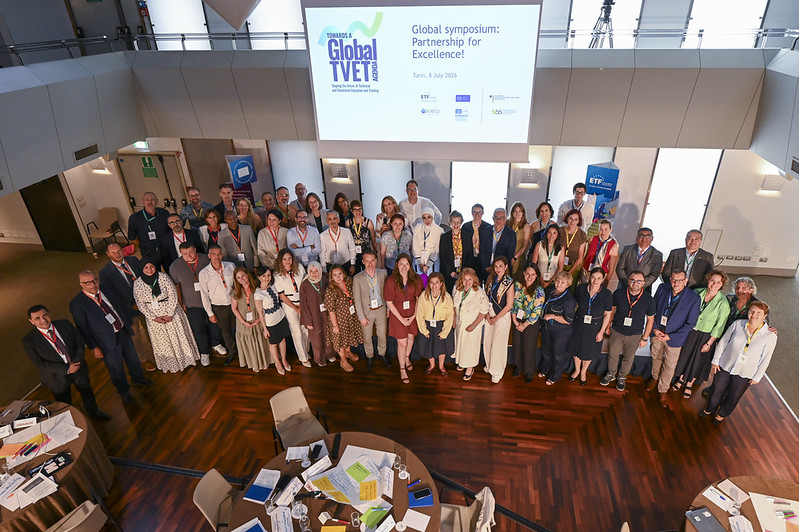
Partnership for excellence
The ETF contributes to TGTA through the Partnership for excellence focus area, building on our extensive experience with assisting in the development of Centres of Vocational Excellence (CoVEs) in ETF partner countries. This work is based on an EU model of CoVEs and supports the development of policies that enable CoVEs to take their role as engines of change.
Through our contribution, the ETF supports countries in developing more connected, inclusive, attractive and future‑ready VET ecosystems, bridging education and training providers, industry and public authorities.
The ETF’s objectives
Our contribution to the Global TVET Agenda focuses on three interconnected goals:
- Creating a shared global understanding of vocational excellence, drawing on EU policy initiatives and ETF expertise.
- Building a strong evidence base through thematic studies, country-specific research and a global mapping of approaches to CoVEs.
- Fostering collaboration across TVET systems by connecting institutions, policymakers, social partners and international organisations.
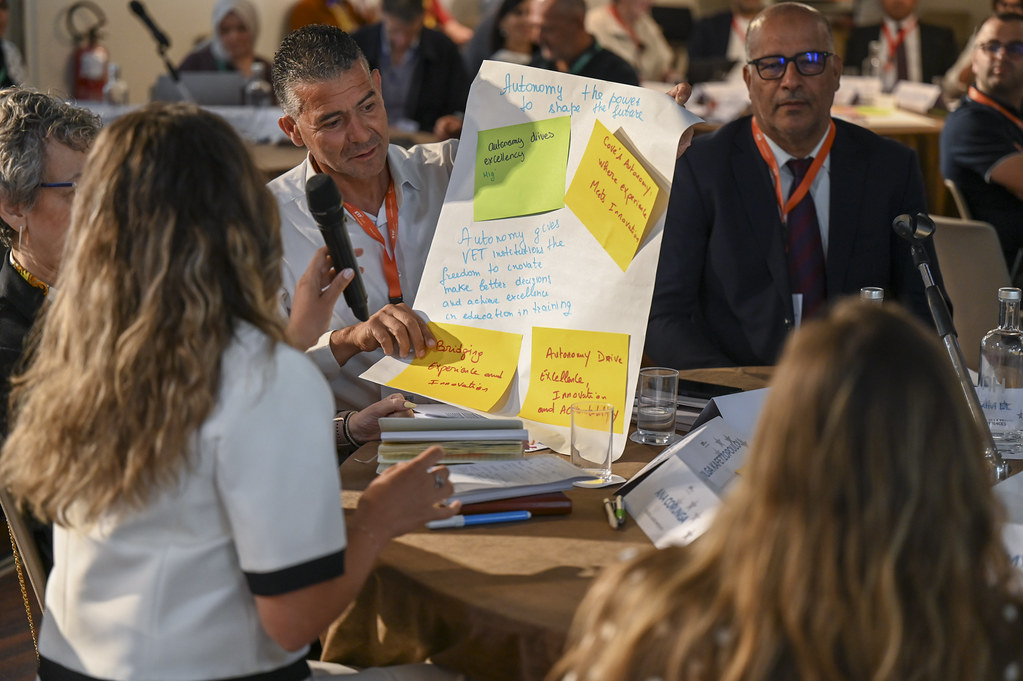
Key activities
To advance these objectives, the ETF is developing a set of complementary activities and tools:
VET Policy Playbook
The ETF is preparing a VET Policy Playbook with different resources structured around 10 challenges. The Playbook aims to offer guidance for policymakers looking for a solution to one or more common challenges they are experiencing, which are addressed in the playbook.
Global evidence and mapping
ETF work on TVET also includes a global landscape mapping of approaches to CoVEs in different countries, alongside targeted thematic studies. These outputs feed into the broader TGTA movement and support evidence‑informed dialogue and reform.
Challenge-based partnerships
The ETF is has introduced the concept of challenge partnerships, whereby countries and institutions work together on concrete VET policy and implementation challenges related to CoVEs on the basis of shared challenges they face or have faced. Through time‑bound, cross‑regional challenge partnerships, ministries, agencies, CoVEs and experts co‑create policy options, share lessons learned and contribute to a growing repository of effective practices.
Global engagement
As part of its contribution, the ETF organises live events and symposia on vocational excellence, alongside policy webinars and peer‑learning exchanges that foster global and regional dialogue on VET innovation and vocational excellence in particular.