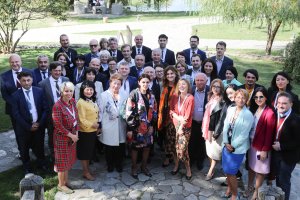
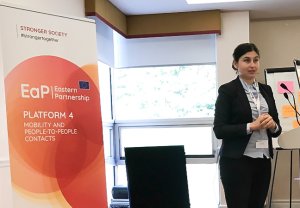
Work-based learning in VET is a key to address youth unemployment and employability: Latest conference of ETF network on work-based learning for Eastern Europe and Kazakhstan took place on 9-11 October 2018 in Lopota, Georgia
Senior government officials, training and skills professionals and statistics experts from the six countries of the Eastern Partnership (EaP) came away from a Skills Anticipation conference in Dublin enthused and inspired by Irish experience in gearing up for skills demands of an increasingly globalised and digitalised labour market.
The International Labour Organization (ILO) and the European Training Foundation (ETF) are teaming up to run a training workshop in Turin mid-November on improving the financing of VET and skills training.
Civil society is a key partner in the development of skills and vocational education and training. Close to the communities on the ground, Civil Society Organisations (CSOs), including NGOs, associations, youth groups, community-based organisations, etc., help to shape development cooperation strategies.
Over one hundred stakeholders from all over Turkey are meeting with ETF and international experts in the Turkish town of Mudurnu on 19-21 September to agree on how to further strengthen the country’s vocational qualification system.
Launched in November 2017 at the first EU Social Summit for 20 years, the European Pillar of Social Rights is a set of principles and rights that aims to support employment and social outcomes to fulfil ‘people’s essential needs’.