
Снимка
Education has been a focus of national policy since the current structure of education was established in a 1994 decree. The legal foundations of the Belarusian educational system are in the Constitution adopted in 1994 and further revised in 1996. The law governing the education sector is the Education Code of the Republic of Belarus (2011).
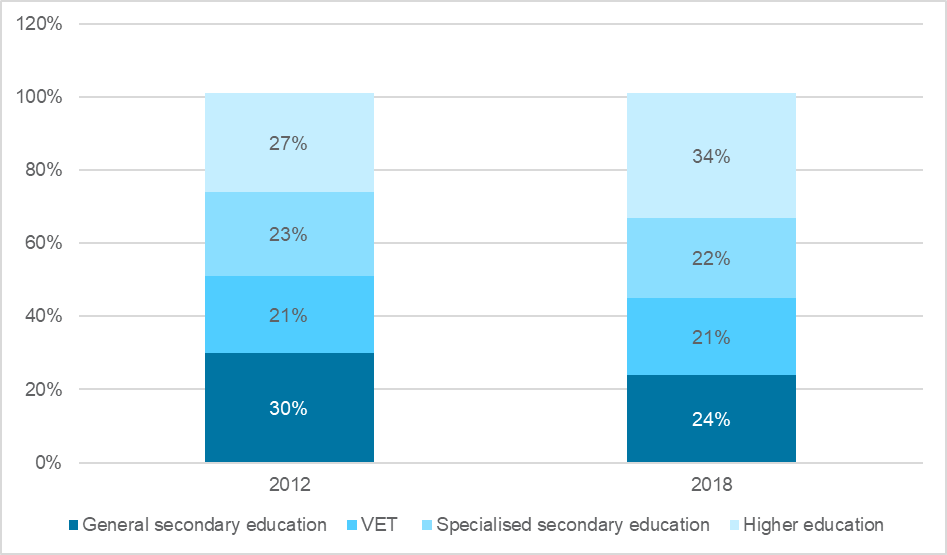
Article 49 of the Constitution guarantees every Belarusian citizen the right to a free and compulsory general primary and basic general education as well as vocational training. As a result, general basic, general secondary and professional education coverage of the working population is 98% and the country boasts full literacy rate (99.8% adult literacy rate). Based on national statistics, 12% of working age population has vocational technical education, 30% has secondary specialised education, and 20% has higher education.
According to Article 14 of the Law on Education, the system is composed of pre-primary education, general secondary education, vocational technical education, secondary specialised education and higher education. In addition, the article covers teacher training, advanced training and retraining, and independent education. The ratio of specialised secondary and university students (120 and 298 respectively per 10,000 people as of 2018/2019 academic year), is higher than many EU member states.
Pre-school education is not compulsory; however, most children attend it before they start school. This is largely due to the fact that mothers have a right to retain their employment and get child-care allowance until their children are three, at which point most toddlers (in particular in urban areas) start pre-school (DIE, 2017).
Compulsory or basic general education starts at the age of six and lasts nine years. Upon completion of basic general education, students receive a Certificate of Basic Education.
In terms of educational standards, Belarus is on par with developed countries. The results of Belarus in the 2018 Programme for International Student Assessment (OECD, 2019), the first time the country took part in the assessment, is a testament to that. The results (36th place – just below Russia that ranked 30th, and above Ukraine 40th , Moldova 51st, Georgia 69th, and Azerbaijan 62nd) indicate that socio-economic status is a strong predictor of performance and that disadvantaged students hold lower academic ambitions than would be expected given their academic achievement. In terms of gender, as opposed to the OECD average, in Belarus girls scored similar to boys in mathematics. Amongst high-performing students in mathematics or science boys and girls have similar aspirations to work in the field of engineering or science. Some 13% of boys and 2% of girls in Belarus expect to work in ICT-related professions.
Table 2. Human Capital Development Indicators
|
Indicators |
Value |
Year |
|
Skilled labour force (% of labour force) (UNDP) |
98.6 |
2019 |
|
Employment in agriculture (% of total employment) (UNDP) |
10.6 |
2019 |
|
Employment in services (% of total employment) (UNDP) |
58.7 |
2019 |
|
Average years of schooling (UNDP) |
12.3 |
2019 |
|
Expected years of schooling (UNDP) |
15.4 |
2019 |
|
Literacy for those 15 years and older (UNESCO) |
99.8 |
2018 |
|
Gross enrolment ratio in secondary education (% of the total population in that age group) (UNESCO) |
102.44 |
2018 |
|
Net enrolment rate in secondary education (% of the total population in that age group) (UNESCO) |
95.64 |
2018 |
|
Enrolment in technical and vocational education and training (TVET) as % of the total enrolment in secondary education |
41.65 |
2018 |
|
Gross enrolment ratio in tertiary education (% of the total population in that age group) (UNESCO) |
87.43 |
2018 |
|
Number of pupils per teacher in secondary education |
8.56 |
2018 |
|
UNDP's Human Development Index – ranking among 189 countries |
50 |
2019 |
|
Global Innovation Index – ranking among 126 countries |
86 |
2018 |
|
Research and development expenditure (% of GDP) (UNDP |
0.6 |
2019 |
|
Female shares of graduates in science, technology, engineering and mathematics programmes at tertiary level (%) (UNDP) |
15.4 |
2019 |
|
Internet users, total (% of population) (UNDP) |
79.1 |
2019 |
|
Old-age (65 and older) dependency ratio (per 100 people ages 15-64) (UNDP) |
21.7 |
2019 |
|
Net migration rate (per 1,000 people) (UNDP) |
0.9 |
2019 |
Following completion of basic general education, students can either opt for general secondary education (2 years), provided by general secondary schools, or pursue their education in gymnasiums, lyceums and colleges, or specialised and technical schools. Gymnasiums provide general secondary education at a higher level and focus on the study of foreign languages. Lyceums provide vocationally oriented education that completes general secondary education. As a rule, lyceums use the teachers and educational facilities of universities and research institutes.
Colleges provide general secondary education that is oriented towards vocational education and training. Secondary vocational education (3 years, ISCED4) is offered by vocational technical schools and apprenticeship programmes. Specialized secondary education (2-4 years, ISCED3 to ISCED 5) is offered by technicums, technical schools, and colleges.
Figure 2. Distribution of working age population by education level (end of the year)
Source: Republican Institute for Vocational Education (RIPO)
VET remains relatively popular in spite of the declining participation in recent years. While the employment of VET graduates does not seem to be a problem as the system is able to guarantee nearly 100% employment, the Belarusian partners acknowledge the need to diversify and modernise their economy for which new skills and competences are needed (EC, 2019b). Diploma of vocational education
Secondary specialised and higher education can be obtained free of charge in state educational institutions on a competitive basis. In 2018/2019, the share of publicly funded students was 64% in secondary specialised and 44% in higher education indicating a high level of commercialisation of higher education. The principles and functions of education are further defined in the laws: "On Education in the Republic of Belarus," "On Languages," "On National and Cultural Minorities," "On the Child's Rights," as well as a number of statutes and regulations.
Belarus has a high level of participation in higher education. Higher education (3-4 years, ISCED 5 to ISCED6) is offered by public and private universities, academies and institutes. These higher education institutions offer a 2-stage (full-time as well as part-time) system of higher education that leads to the academic degrees of Bachelor and Master. About half of the students study for free while the other half can apply for financial support from the government or private financing.
Students who complete the secondary stage can go for postgraduate education. Postgraduate education comprises of doctorate studies. Doctorate last for 3 years and lead to Doctor of Science degree.
The overall scope and structure of education and training provision is defined annually. They are based on the state order for the training of workers and specialists (Decree of the Council of Ministers of the Republic of Belarus No. 972 of 19 July 2011), taking into account the current situation of the labour market, the regional demography and the potential of the educational establishments. This system of “State order and reception” (GOSZAKAZ and PRIYEM) is an automated system for the formation of an order for the training of qualified personnel for all sectors of the economy and creates the conditions for statistical accounting and analysis of changes for human capital development.
Figure 3. Employment by broad ISCO08 occupations (% aged 15-74)

Source: ETF database
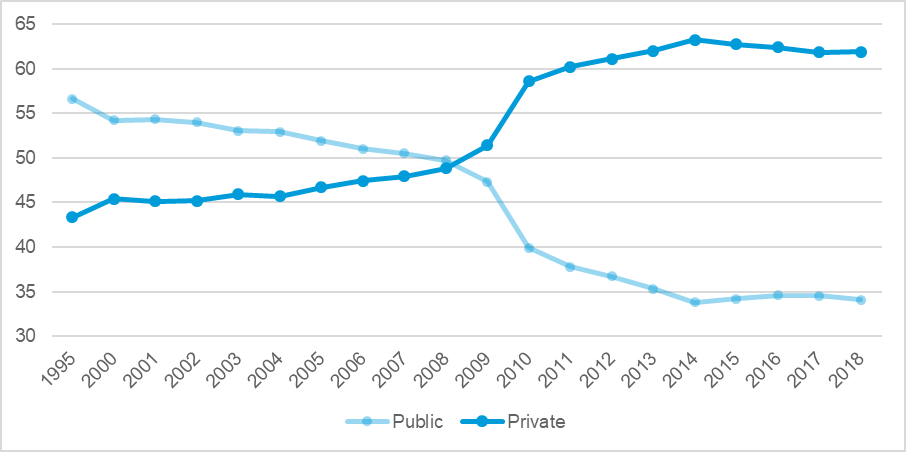
Due to the state policy of maintaining a high level of employment, state owned enterprise restructuring is a matter of deep social concern and, due to fears of significant labour shedding, a key argument for delaying reforms in the past (WB, 2018). The private sector share of employment reached a peak in 2014 (63.2% of employment) and has been declining since (Figure 4). Particularly SMEs seem to struggle with growth, while the number micro enterprises is rising (Figure 5). Further research would be needed to understand the specificities of skills shortages, in the pursuit of turning the country into an innovative and competitive knowledge-based economy, are becoming an increasing concern for SMEs in Belarus.
Belarus has the highest share of industrial employment (30.1%, 2017) in the region, followed by Ukraine (24.3%)[10] ETF database
. Normalising the number of state-owned companies (4,734) by population puts Belarus at the top all countries in Central, Eastern, and South-eastern Europe with 380 state-owned companies (SOEs) per one million inhabitants (with about 220 in Russia). The high concentration of industrial employment is driven by SOEs which play a central role in the economy and account for more than 75% of industrial output, around 60% of fixed capital investment, and almost 50% of employment in 2016 (IMF, 2017).
By contrast, in 2018 micro and SME employment stood at 1.49 million employees or 56.1% (2019a) of total employed population - a significant increase from 2000 when the share was 42.4%. However, despite targeted structural reforms in recent years, while the number of micro enterprises in Belarus has been growing, the overall number of micro and SMEs declined by 4% between 2012 and 2018. Nevertheless, the overall loss of labour in SOEs which declined from 54.2% in 2000 to 34.1% in 2018 (see Figure 4), has been compensated by the private sector - primarily by micro-enterprises.
Figure 4. Development of public and private sector employment shares (% of total, 1995-2018)
Source: Belstat, 2018b
The breakdown by size of business shows that in 2018 micro-enterprises make 89%, small 10% and medium sized businesses 2% of the total number of MSMEs (93% of which are operated with private capital) (Belstat 2019a and authors calculations). Between 2012 and 2018 the number of small enterprises decreased by 3% and the number of medium enterprises decreased by 13% – while the number of micro entrepreneurs increased by 226% (Belstat 2019a and authors calculations). The decrease in medium-sized enterprises 66% of which are in industry, construction and agriculture and their share in employment indicate that they may be facing difficulties in terms of growth. This trend is similar to that of EU member states and the region and underscores the importance of supporting SMEs in moving to higher value added activities. The problem is that while government's measures have been effective in increasing the number of micro-enterprises, the number of medium sized is declining – and the company size is shrinking.
Figure 5. Number of micro, small and medium sized businesses with private capital

Source: Belstat, 2019a
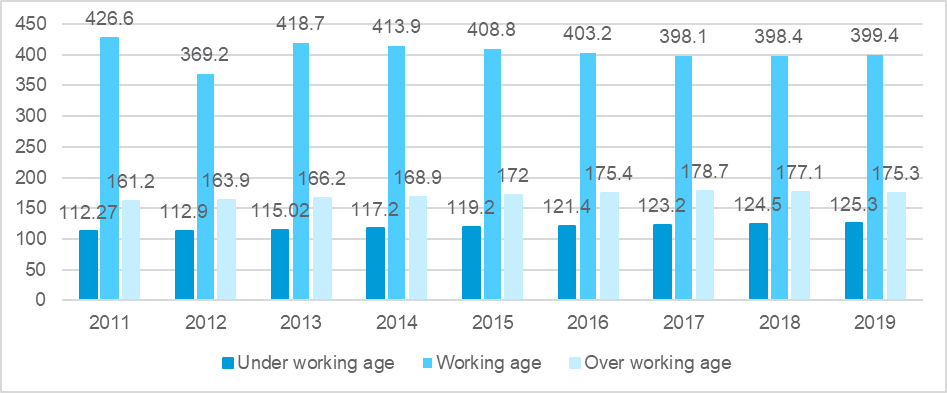
Belarus is ageing. One in five citizens in Belarus is retired. The number of working age population is declining. The current pension reform is insufficient in addressing the demographic decline. Further analysis is required to why job seekers over 45 are refused employment and high inactivity rates for those over 50. With an ageing population and limited immigration (Figure 11), the share of working age population will continue to decline and the role of lifelong learning in ensuring active citizenship and social inclusion is increasing[11] NRF, B.1.1 Participation in VET
.
At the beginning of 2019 there were 2.4 million retirees in Belarus, which is more than 25% of the total population (26% in the capital - and between 29% and 30% in all regions). According to the demographic forecast, by 2030 the share of retirees will increase to 27%. This is putting a considerable strain on the state budget (9% of the GDP in January 2017) and likely to increase.
Figure 6. The proportion of the population of the main age groups in the total population (at the beginning of the year; in %)
Source: Belstat 2018b
By 2022, the pension age from women will have increased from 55 to 58 for women, and from 60 to 63 for men. Further changes in pension legislation have not yet been envisaged. In addition, according to Decree 534 of 31 December 2015, the minimum qualifying pensionable service will also increase gradually to 20 years by 2025.
However, raising the pension age may not be sufficient. Structural developments, technological, organisational and market changes are affecting jobs and skills needs of an ageing workforce. The changes are affecting employment prospects for adults[12] NRF, B.1.6 The role of VET through active labor market policy
and registered unemployment is growing with age – with women the most affected (see Figure 8). Today, 44.3% of people of aged 45-54 are refused of employment due to age (21% of whom have vocational technical education, 33% secondary specialised education, and 14% higher education) (EC, 2019b).
Inactivity rates are high (35.7%) in age group 50-64 (24.8% for men and 44.6% for women).To ease the financial burden of pensions, the government has been gradually raising the retirement age since January 2017 (raised by 6 months annually) and aligning the pension ages for men and women. The causes of the low activity rate among older people must be addressed to ensure that the potential benefits of longer working lives are achieved. To ensure the ability of adults to adapt to a changing labour market and find employment, access to job-related adult learning and continuing vocational training needs to be re-looked at.
Figure 7. Share of registered unemployed, % of total (2017)
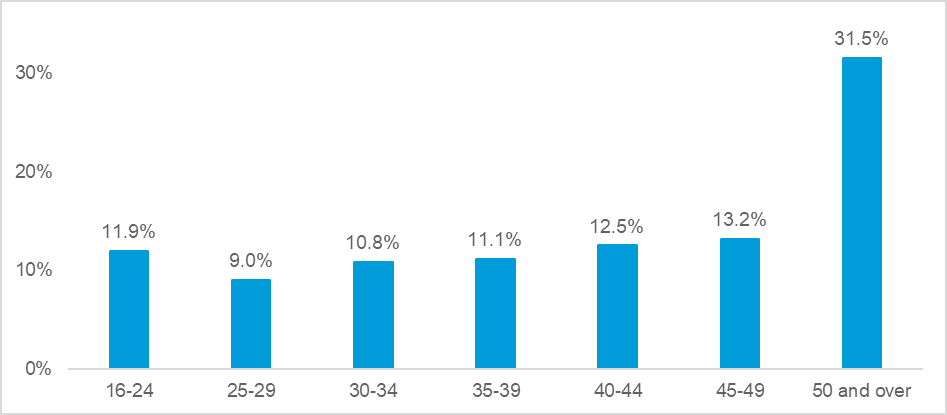
Source: Belstat and authors calculations
Figure 8. Unemployment rate by educational attainment (% of aged 15-74)
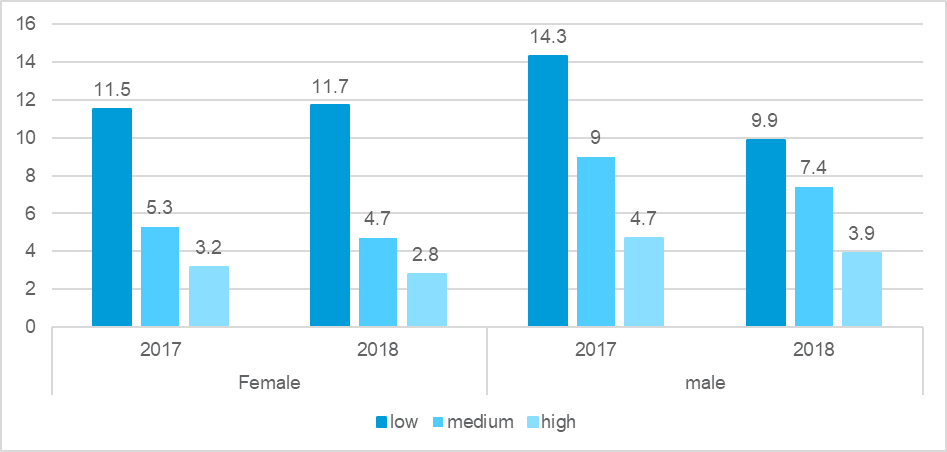
Source: ETF database
As the workforce ages, education and training systems must respond. With limited opportunities to replenish the labour force, education and training policies are at the forefront of improving the adaptability and employment mobility of an ageing workforce. It needs to respond to the needs of the economy and that of learners, including the elderly (aged 65+), with skills important for active citizenship and continued personal development (e.g. digitalisation of public services). In addition, longer careers due to pension reform, a more dynamic labour market and the impact of technological changes on jobs (e.g. automation) are changing skills needs of an ageing workforce at an unprecedented speed[13] NRF, B.3 Active labour market measures
. Fostering a culture of lifelong learning with an adaptable workforce is better able to adapt to economic shock.
At present, in terms of ageing, labour legislation does not address prolonging active working life but rather focuses on social integration of the elderly. Also, the government does not provide financial support for entrepreneurship training for silver entrepreneurs (aged 50+) nor are civil society organisations active in this area. However, within a new project “Employment, Vocational education and training in Belarus", funded by the European Commission, a lifelong learning strategy will be developed.
The adult education system in Belarus includes state, local executive and administrative bodies. Various educational institutions (391 in total) carry out advanced training and retraining of public sector employees: executives and specialists, as well as workers and employees. The vast majority of VET institutions (88%) implement VET programs for adults[14] NRF, A.2.3 Basic statistics on VET
. A distinctive feature of the system of additional adult education in Belarus in accordance with the Code of the Republic of Belarus on education is that all organisations, including individual entrepreneurs, can implement continuing education programs for adults.
In spite of the importance of adult education, at the moment no monitoring system that would provide an overview of the provision by public and private providers is in place. The Ministry of Education, Department of Advanced Training and Retraining, is responsible for overall coordination of adult education. However, focus is on public retraining of civil servants and existing monitoring covers only provision of adult education by public institutions. In practice, among civil servants, additional adult education is significantly more used by higher education graduates (44.1%) than VET (7.7%) or secondary specialised education (16.1%) (Novak, 2019). This is due to the fact that until recently, certain professions e.g. public administration, teachers, have been required to undergo retraining every five years. In 2020 Belstat is expected to release the participation rate in lifelong learning (from 25 to 64 year old) based on new calculations where the LFS has been adapted to reflect better the Eurostat standards. According to the preliminary calculations based on the previous LFS questionnaire on LLL the participation rate has been around 8% which is relatively high and comparable to many EU member states. Belstat Head of Labour Statistics estimates participation rate to be slightly lower based on the new set of questions.
At present, there is no data collection and monitoring system in place to provide an overview of non-formal learning services provided by civil society organisations (CSO). Based on a survey conducted by the German Institute for Adult Education (2017), one can conclude that the capacity of civil society organisations is rather limited. According to the data, even if all providers of civic education were equally effective in outreach as the CSOs responding to the survey, the overall outreach by civic education programmes would not exceed 100,000 participants over 5 years, which is about 1.8% of the working age population (approx. 5,430 thousand, Belstat 2018). Of this, according to the survey, only 2% is targeted at the elderly.
State program 'Education and youth policies' 2016–2020 aim is that in 2020 15% of the population benefits from adult education (up 5% from 2017, advanced training and retraining). This goal is consistent with the goal set by the European Union. However, as official statistics only relate to formal professional education and the upskilling of the working-age population, it can be expected that, if the measures are successful, the actual share of the adult population involved in learning will be higher.
In 2019, the biggest labour shortages in the history of the country have hit Belarus. The shortages are both quantitative and qualitative. Skills gaps, qualitative skills mismatches, are growing in certain sectors. OECD data in 2013 indicated that 17.9% of Belarusian employers identified an inadequately educated workforce as a major constraint for their competitiveness. Similar results were identified in a Belarusian study in the same year, in which 19.8% of SMEs surveyed reported low skills levels and the low quality of the workforce as obstacles for their business (IPM Research Centre, 2013). Widening of the disconnect between labour market skills needs and demand could threaten economic growth – in particular in a catalytic sector such as the ICT, a priority for the government.
Already in 2011 the Torino Process Report stated the mismatch between the content of vocational education and the needs of digital and hi-tech economic sectors, the lack of forward planning in relation to future training for innovative enterprises and the underestimation of the limited possibilities to replenish the labour force with the young generations while there is a significant dropout from the working age of the workers at a relatively young age due to low pension age.
Evidence shows that labour markets do not work perfectly and some lag between emerging demand for labour and skills (e.g. as a result of the development of private sector or new sectors such as ICT) and the response of labour supply (as education and training programs typically take a few years to catch up) is normal. However, while some labour shortages and gaps in Belarus are a healthy in that they indicates the changing skills needs due to economic transformation[15] NRF, B.1.3 Policies on VET access
, excessive mismatch risks having adverse consequences both for the individual and the employer, and eventually – the economy.
Figure 9. Supply and demand for labour (in thousands)
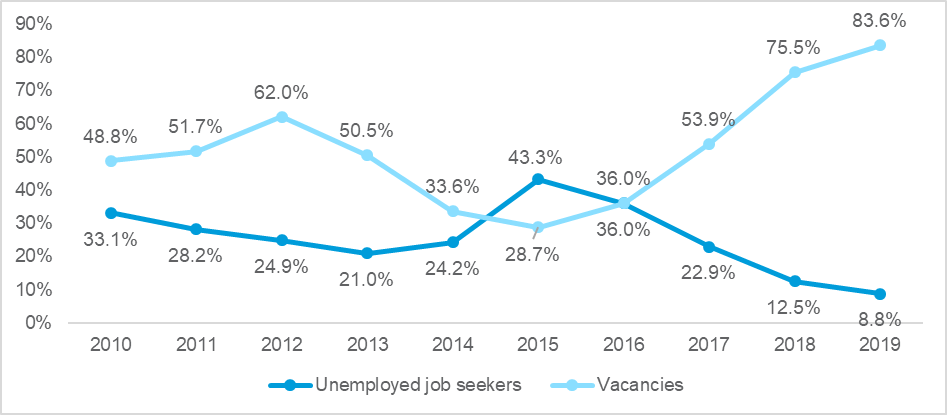
Source: Ministry of Labour and Social Protection[16] Ministry website
Labour shortages in Belarus are the result of demographic changes with a reduced supply of labour, structural (caused by changes in the structure of demand and production technology) and technological (arising from the development of automation of production activities) changes. Despite an abundance of university graduates, in particular companies in the private sector are reporting skill shortages.
Skills mismatches result from both over-qualification and under-qualification. The accessibility of higher education and an overall negative image of vocational education that prevails have increased the influx of graduates from higher education institutions, which has not been matched by increased availability of graduate level jobs, forcing many young people to work in roles for which they are highly overqualified (ETF, 2019). In 2017, for the first time, the number of registered unemployed with higher education surpassed that of specialised secondary education (secondary non tertiary).
Lack of specialised education is rarely the reason for employers to not employ a job seeker. The fact that even if workers have an education and training background that is seemingly unrelated to their work implies that their field of studies per se may not matter so much. What will matter, in terms of future productivity growth in manufacturing, particularly in the context of ongoing technological changes, is that either skills mismatches are corrected through occupational mobility or through different forms of training. Currently no data is available to the cost of skills mismatches in terms of productivity or investment in skills development.
While share of workforce with higher education has been relatively stable over time the share of jobseekers with post-secondary VET (specialised secondary) has been declining while the share of those with initial VET is increasing (Figure 9). Therefore, considering that the number of job seekers is low, there might be a slight oversupply of skilled workers in elementary occupations and better employability of highly skilled workers.
Figure 10. Unemployed registered with labour, employment and social protection authorities, by level of education (% of total)
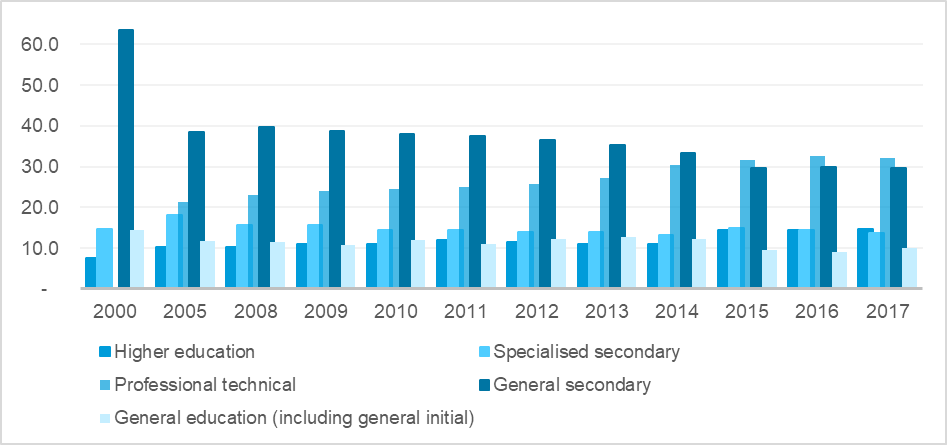
Source: Belstat[17] Belstat website
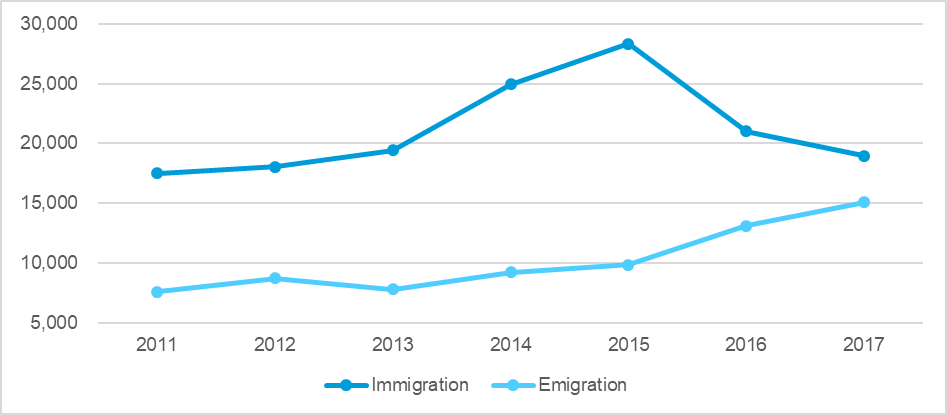
Emigration for work is low but practically tripled between 2011 and 2017 (see Figure 10). Low wages in Belarus as compared with neighbouring countries is affecting the country's ability to retain skilled workforce, and exacerbating labour shortages and skills mismatches in the national labour market. For incoming migrants the problems include not only attracting qualified labour migrants and retaining them, but also providing them with long-term employment.
Figure 11. Emigration and immigration 2015-2018
Source: Belstat, 2018b