
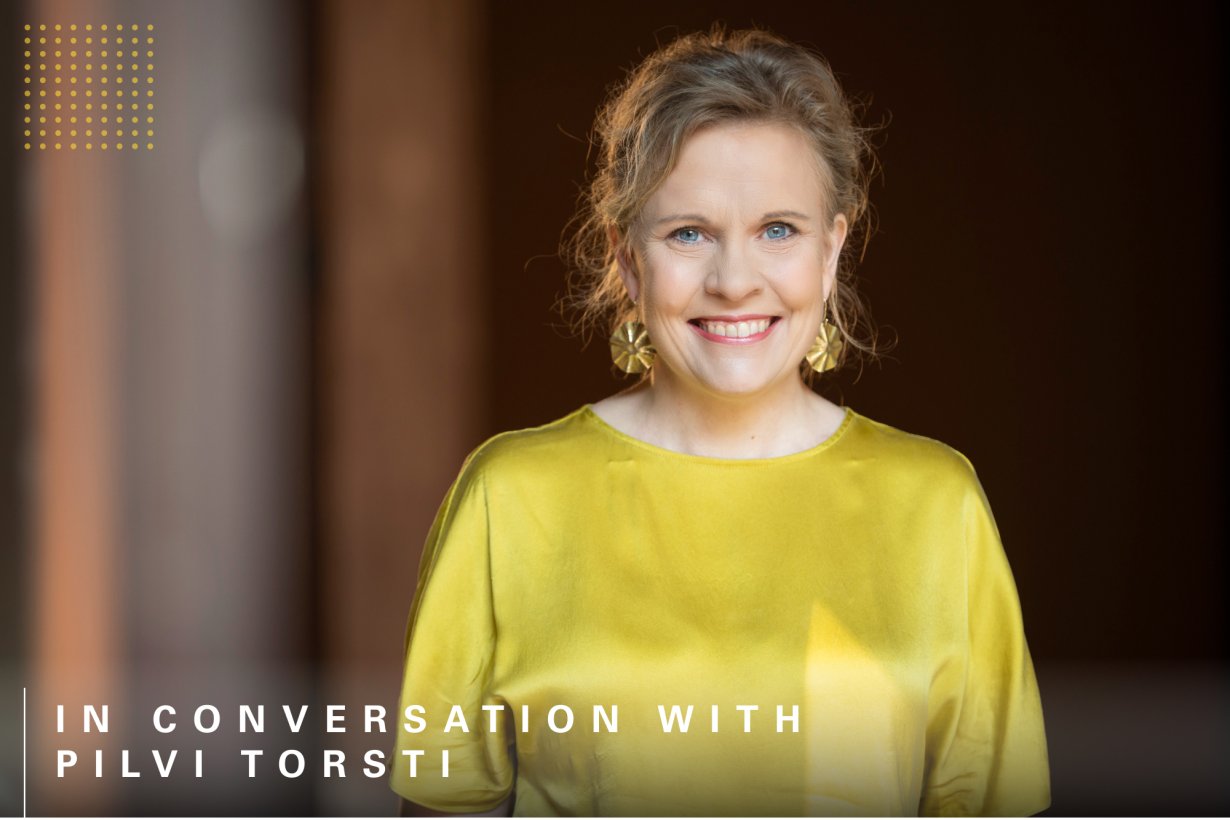
Nicolas Schmit, European Commissioner for Jobs and Social Rights, in conversation with Pilvi Torsti, ETF Director
Asked for his reflections on the last four years European Commissioner for Jobs and Social Rights, Nicolas Schmit, talks about his portfolio on strengthening the social dimension of the European Union, implementing the Pillar of Social Rights, supporting the integration of displaced Ukrainian citizens, the importance of skills in the EU’s external relations with neighbouring countries, and the core premise of solidarity and social justice in all the EU’s actions.
The ETF’s new series 'In conversation with Pilvi Torsti' was launched in June with this interview of Commissioner Schmit. His experience spans several prestigious positions including Minister of Labour and Social Affairs in his home country of Luxembourg, experience in the foreign service at the end of the Cold War, and being a Member of the European Parliament prior to his current position.
Commissioner Schmit talks about the great privilege he had in contributing to the elaboration of the European Pillar of Social Rights when working in national government, and then being at the helm of its implementation as European Commissioner.
“The EU’s Pillar of Social Rights acquired even greater importance in Europe as it became engulfed by devastating crises; financial, the Covid-19 health pandemic and the Russian aggression in Ukraine,” said the Commissioner, “at the same time the EU’s ambitious goals to address climate change with the Green Deal and digital transition require even greater focus on the social dimension, especially for young people who have been disproportionately affected and placed at greater risk of marginalisation by these events.”
Director Torsti drew upon her experience in the Finnish government creating the Youth Guarantee, which was then adopted throughout the EU and has inspired similar initiatives in the Western Balkans, the Eastern Partnership region and beyond.
“Thanks to the Finnish initiative, the Youth Guarantee has been vital in bringing young people back to the labour market and training,” said Schmit.
“It is really a structural reform because it requires efficient public employment services and partnerships with education and training providers and employers to make it work. It is a powerful tool particularly in countries outside of the European Union because it enhances the engagement of civil society in developing policies and implementation strategies that benefit youth, particularly at times of crisis.”
Turning to the war in Ukraine the Commissioner reflects on the EU’s approach and how it learnt from experience to respond quickly with the Temporary Protection Directive that supported displaced Ukrainian citizens in the EU to immediately benefit from social and education services, allowing them to start working quickly and children to go to school with added support via digital means in the Ukrainian language.
“I think we have shown solidarity at all levels with Ukraine,” said the Commissioner, “and we will continue up to the end and then after to rebuild Ukraine to make it a thriving Member State of the European Union, building on the capacities of the Ukrainian people.”
Director Torsti also complemented the Ukrainian government and citizens with their progress and determination, notwithstanding the Russian aggression, on education and skills development which the ETF has been supporting.
The European Year of Skills is highlighted as an important opportunity to raise awareness and actions about skills development internationally, particularly in the EU’s neighbouring regions and the African continent in light of the green and digital transitions. The EU's population is ageing and will increasing rely on migrant skills for which the EU is implementing mobility arrangements and talent partnerships with several countries.
“There’s a thriving youth with a lot of potential and we are an ageing continent, so working with other countries and developing a skills mindset is essential,” said Commissioner Schmit.
In conclusion, when asked by Director Torsti about those issues which he holds particularly dear, Nicolas Schmit pointed to the EU’s rapid decision making and solutions found during the crises that engulfed the continent, which had not always been the case in the past with the EU being criticised for moving slowly.
“One could say there has been a renewal of the European spirit and solidarity. I’m very proud of the implementation of the Child Guarantee, and the Youth Guarantee. It is about giving each individual the right opportunities, the right education and skills. We work with our neighbours on the same basis.”