
Putting the Mediterranean at the centre of the skills map
At first glance, a conference on vocational education and training reform might sound like a technical discussion. Qualifications. Labour market needs. Skills portability. Skills provision. Centres of vocational excellence.
Yet in Lefkosia (Nicosia), at the International Conference People, Skills and Partnerships: Delivering Vocational Education and Training Reforms in the Mediterranean, the discussion was more than technical. The question was broader: how can skills systems help people, societies, and economies in the Mediterranean region work better together?
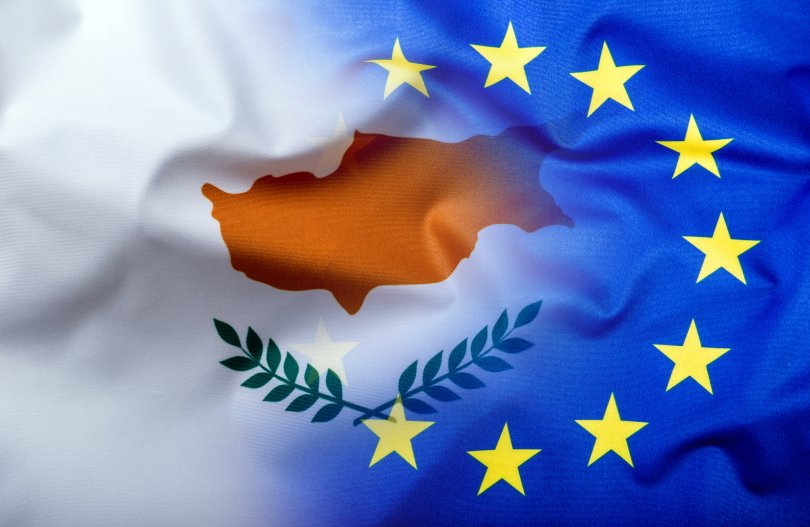
Held in the final days of the Cyprus Presidency of the Council of the European Union, which ends on 30 June, the conference also echoed one of the Presidency’s wider messages, that Europe’s future depends on cooperation with its neighbours.
Addressing the participants representing 16 different countries, Cyprus Minister of Education, Sport and Youth Dr Athena Michaelidou was succinct.
“Investment in skills is no longer just an educational priority,” she said. “It is an economic, social and strategic imperative.”
That idea ran through both days. Across the Mediterranean, countries are dealing with many of the same challenges: demographic change, migration, youth unemployment, the green and digital transitions, and the gap between what people learn and what labour markets need. The discussions in Cyprus also showed that these are shared challenges that should lead to new forms of cooperation. The EU’s Pact for the Mediterranean is the policy framework that will put this into practice.
Pilvi Torsti, Director of the European Training Foundation, invited participants to change their perspective: “Put the Mediterranean Sea in the middle of your map and see what you see.”Seen this way, the Mediterranean becomes a link between economies, cultures, people and histories, and between education systems and labour markets that increasingly need to understand each other better.
This matters because skills become even more useful when they can travel: between school and work, between sectors, between countries, and throughout people’s lives. Without recognition, guidance, practical experience and opportunity, people’s talents can remain invisible. A country can reform its training system, but without employers, social partners, schools, universities and communities working together, reform can remain on paper.
As Michaelidou noted,
"the future of skills depends not only on what we teach, but also on how we cooperate.”
During the visit to the Technical and Vocational School of Education and Training in Lefkosia (Nicosia) brought this idea to life. Participants saw practical learning in action, including the preparation of traditional Cypriot products such as halloumi and anari. For Elias Margadjis, Director for Secondary Technical and Vocational Education and Training at the Ministry of Education, Sport and Youth of Cyprus, the visit showed how much Cyprus shares with the wider Mediterranean.
In his closing reflections, the ETF’s Head of Unit, Georgios Zisimos, picked up on some of the ideas from the conference. One was the need ‘to be humane’ in policy and practice. Another was the idea that education, in some sense, is an act of optimism.
That optimism is important. In a region where many people face uncertainty, conflict and limited opportunities, education and training can help create a way forward.
The challenge now is to turn that optimism into practice. That means stronger skills ecosystems, where all the partners who have something to do with skills are brought together. It means vocational excellence that is high-performance and inclusive. It means that mobility is about movement and trust in what people know and can do. And it means partnerships that continue beyond one event, one project or one presidency.
As the Cyprus Presidency comes to an end, this may be one of the lasting messages from the conference: Europe’s openness to the world begins with its willingness to work seriously with its neighbours. Skills policy can be part of that openness.
Cyprus is a natural place for this conversation. An island at the crossroads of Europe, the Middle East and North Africa, it reminded participants that geography still matters.
Put the Mediterranean at the centre of the map, and skills become more than a labour market issue. They are part of a shared conversation about people, cooperation and the future.
Did you like this article? If you would like to be notified when new content like this is published, subscribe to receive our email alerts.