
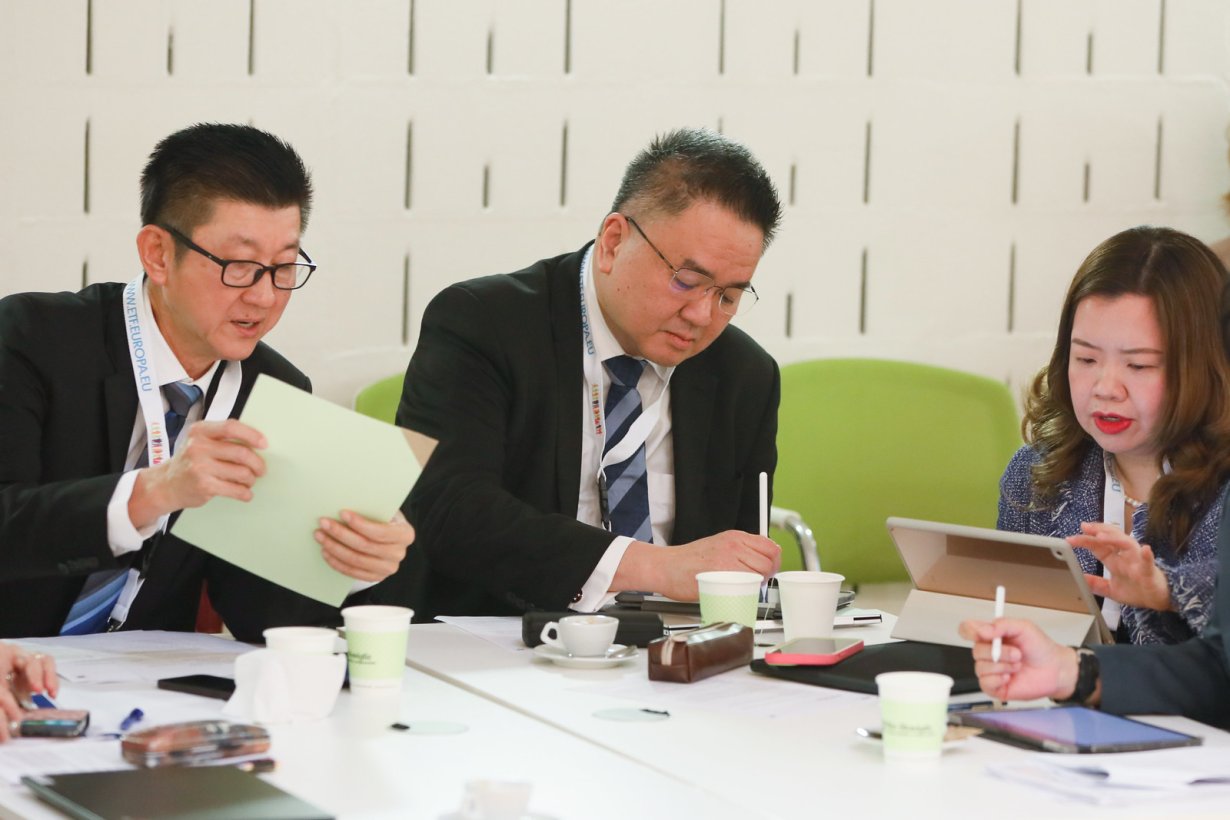
Skilling young people: ETF and Thailand share experience
The rising share of young people who are not in employment, education, or training (NEETs) in Thailand represents a concerning social and economic phenomenon. Today, nearly 1.4 million (or 15%) of young people aged 15–24 years in Thailand are NEET, and a recent UNICEF-led study found a majority of NEETs lack motivation to develop skills or work due to a perceived lack of opportunities.
“We must address the issue of young people in poverty in Thailand now, otherwise it will be an even bigger problem in the future,” said Dr Wanchat Suwankitti, Deputy Secretary-General of the Office of the National Economic and Social Development Council during the recent visit of a government delegation from Thailand to the European Training Foundation (ETF) in Turin.
The purpose of the visit was to engage in a week-long peer learning programme in Italy. The itinerary included visits to the Public Employment Services, regional authorities, as well as education and training providers in the regions of Piedmont and Veneto. The primary objective was to acquire knowledge about youth-related programmes and measures designed to tackle the issue of youth unemployment. The EU’s Youth Guarantee Scheme is a commitment by all EU Member States to ensure that all young people under the age of 30 receive a good quality offer of employment, continued education, apprenticeship or a traineeship within a period of four months of becoming unemployed or leaving education. The ETF has supported its successful implementation in the Western Balkans and similar initiatives are also being planned for other regions within the European Union's neighbourhood.
Like many of these countries, Thailand is facing challenges relating to an ageing population combined with rising youth unemployment and disengagement. Starting in target regions, Thailand has set itself ambitious goals. Starting in the Udon Thani province, it is attempting to reduce the number of young people in the 15–24 age group not in employment, education or training (NEETs) from 15 to 5% within five years.
Boonchob Suthamanuswong, Permanent Secretary of Thailand’s Ministry of Labour, who led the Thai delegation during the visit said:
“The Ministry of Labour acknowledges the significance of youth development as a crucial component of human capital. Consequently, we have established a target in our operational plan to decrease the number of youth classified as NEETs, while simultaneously equipping them with the necessary skills to become a high-quality workforce. This is vital for propelling Thailand's future economic growth and development.”
Drawing upon her experience as a member of the Finnish government, which played a crucial role in introducing the Youth Guarantee initiative in Finland, ETF director, Pilvi Torsti, emphasised the significant impact the Guarantee had had on promoting wider adoption throughout the European Union.
Supporting youth into employment, education or training requires cross-ministerial effort bridging education, employment, enterprise, municipalities, and good working relations with the third sector of non-governmental organisations, and civil society more broadly.
“We know that the EU is doing a lot and we want to learn from the experience in EU Member States, specifically Italy on this occasion, and also learn from the ETF’s experience working with countries in the EU’s neighbouring regions,” said Dr Suwankitti. “The key to successful policies is in the implementation,” he added.
Policy approaches, innovative programmes and ingredients for enabling the successful transition from school to work featured strongly in the peer learning agenda, with attention to the role of individual stakeholders, work-based learning, performance monitoring and evaluation systems, and the management of datasets and evidence.
“While reaching stakeholders may not be difficult, the real challenge lies in transforming their mindsets to foster cohesive collaboration,” said Dr Suwankitti.
Ilaria Favero, Chief of Adolescent Development and Participation at UNICEF Thailand, who accompanied the delegation to Italy, reinforced UNICEF's dedication to collaborating closely with the Royal Thai government and partners such as the ETF in tackling NEET challenges.
"The exchange of good practice between the European Union, Italian authorities, and the Royal Thai government aligns with UNICEF's greater objectives of promoting human capital development and integrated services for NEETs. By working together, we can forge sustainable solutions that empower vulnerable youth, fostering their potential and providing them with meaningful engagement and opportunities for a brighter future,” she said.
Participants in the peer learning visit included representatives of the Thailand’s Ministry of Labour and the National Economic and Social Development Council, President of Udon Thani Rajabhat University, as well as representatives of UNICEF Thailand office. The visit was facilitated by the ETF in collaboration with representatives of the Piedmont and Veneto authorities, education sector, business sector, research and non-governmental organisations.
Background
The government of Thailand and the UNICEF country office, in collaboration with the ETF, initiated a study on young people not in employment, education and training and value of integrated services to support labour market integration, skills development and social inclusion of young people (In-depth research on youth not in employment, education or training (NEET) in Thailand | UNICEF Thailand.)
The research revealed key contributing factors to the NEET phenomenon in Thailand, identified gaps in current policies and services and provided recommendations for targeted interventions. It also triggered a series of consultations about the next policy actions and capacity-building needs at all levels to address the education, employment and social support needs of young people. The European experience of Youth Guarantee schemes and other types of policy and programmes supporting school-to-work transition proved to be relevant to the Thai context.