
Shaping future skills and societies
Skills are the stepping stone for economic, social and personal growth. It is critical that policy development in skills, education and training keep pace with the fast-changing world of work.
The EU’s policy focus is seen through initiatives including the EU Pillar of Social Rights, the EU2020 Agenda and the new Skills Agenda. Policies that enhance the work ETF with its partner countries bordering the EU.
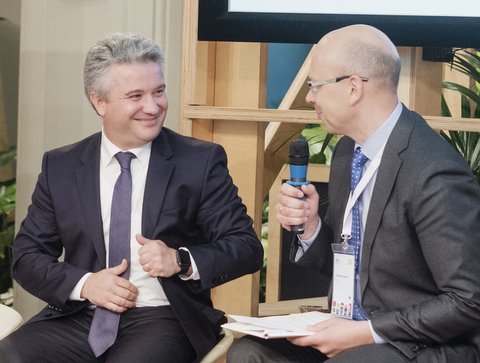
To further explore the EU policy framework, and better understand how transition and developing countries can shape effective policy, the ETF hosted a high-level ‘Exchange of Views’ in Turin on 14 June.
Participants included Governing Board members (EU Member State experts), their colleagues working in external affairs, development and cooperation, officials from the European Parliament, the European Commission and EU Agencies Cedefop and Eurofound.
Discussions focussed on:
-
What the EU, based on prior cooperation, can do through development cooperation to support neighbours to better address the challenge of the fast-changing world of work?
-
How can EU policies and bilateral cooperation be reinforced by the ETF to better support human capital development?
-
In return, how can the ETF’s expertise, tools and programmes support the European Commission and EU Member States?
ETF Director Cesare Onestini says the ETF - the only EU Agency working in external relations - brings a wealth of thematic expertise, knowledge of governance and long-term relationships with the partner countries. ‘This has resulted in sustainable investment and progress in education and skills development, capacity building and enhanced stakeholder cooperation.
‘The impact of technology, new forms of labour, mobility and migration, and the need to diversify the provision, teaching and learning means the ETF must continue to reflect on its work from a wider perspective. In this context, the key question is how can we channel support to the EU policy agenda looking forward, building on the experience gained over the past 25 years.’
Did you like this article? If you would like to be notified when new content like this is published, subscribe to receive our email alerts.