
“Human in control”: Tripartite Exchange Seminar (TES) 2026 sees social partners address the rise of AI and digitalisation
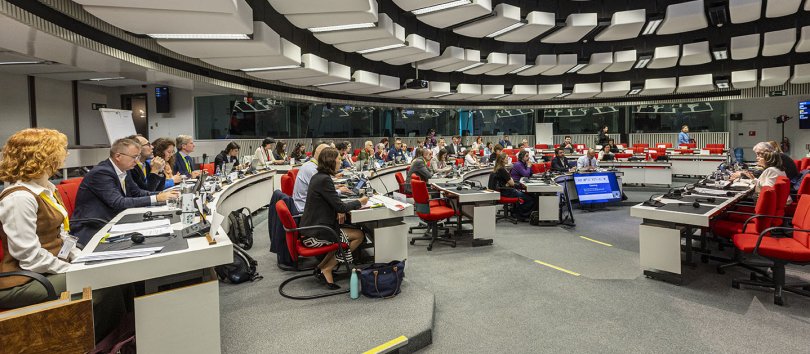
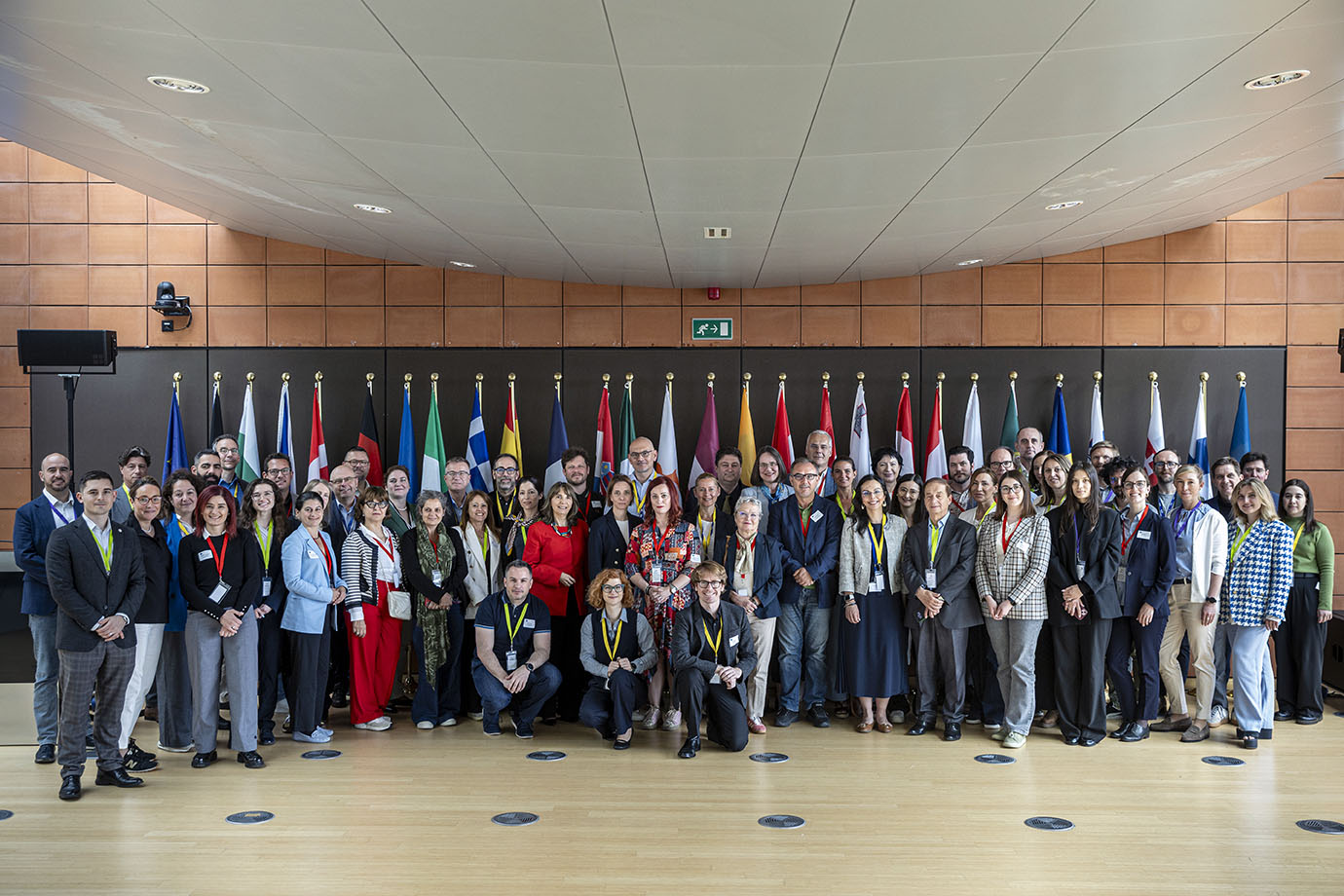
The residential session of the 2026 Tripartite Exchange Seminar (TES) took place in Brussels on 10-12 June. It was a unique opportunity for social partners and government representatives from across the EU, the Western Balkans, Ukraine and Moldova to come together and discuss the era-defining challenges of AI and digitalisation, and how such technological change increasingly impacts workers and the workplace. As in previous years, the seminar’s rich programme of presentations, expert analyses, practical workshops, interactive case study exercises, and hands-on breakout and brainstorming sessions saw participants profoundly engage with the subject matter, voice their thoughts and concerns, and compare experiences from wide-ranging national contexts. Now comes the challenge of implementing the action plans they put together in groups over the course of the three days. Experts and participants will have a chance to revisit and assess these at the online follow-up session on 9 December.
Day 1: The impact of AI on Work
The first day of the TES 2026 residential session kicked off with a welcome address by Séamus Boland, President of the European Economic and Social Committee (EESC), which hosted the three-day event on its premises in Brussels. This was followed by introductory addresses from the Directors of the European Training Foundation (ETF), Eurofound, Cedefop and EU-OSHA respectively. Group work sessions and panel discussions covering the impact of AI on work, the current state of play in digitalisation and AI, and digital transformation ensued.
The main thematic session on day one – entitled “Digitalisation and AI-driven transformation for better work and jobs” – focused on the need for human centricity as workplaces adapt to technological development. Related Eurofound data pointed to a rapid, yet uneven, uptake of AI across Europe; a disparity of varying severity according to sector, age, educational attainment and occupation. Additional evidence presented during the session revealed AI’s impact on job quality, tasks and management practices thus far. It was also suggested that outcomes in these areas are not necessarily technologically predetermined – while AI can heighten automation, augment human work and boost productivity, its impact also depends on how it is introduced, how tasks are redesigned, and whether workers are granted relevant training, protections and a genuine say in its implementation.
As asserted in a recent ETF report on AI and its impact on work, the main opportunity that such technology presents is the possibility to deliver more productive, potentially higher-quality working environments. However, risks are manifold and remain a cause for concern. These include increased work intensity, bias and surveillance, as well as weaker worker participation, uneven distribution of benefits, and discriminatory access that puts women and older workers at a disadvantage.
With this in mind, TES 2026 served as a welcome reminder of the importance of social dialogue as a means of brokering a more just AI transition. Recent EU law has thus far embodied a similar ethos, with the AI Act, the Platform Work Directive, GDPR and consultation rules all placing increased focus on the need for transparency, human oversight, data protection and safeguards against full automation; but more work needs to be done.
As digitalisation and algorithmic management gain momentum, the first thematic session at TES 2026 concluded that collective bargaining and worker consultation are, in fact, more essential than ever, as they offer practical tools for AI governance. Now, the onus is on policymakers and employers to map and classify AI systems, inform and consult workers, adequately assess risks involved, train managers and staff accordingly, and build human-centred governance so that AI may support better jobs, not just faster ones.
Day 2: Workers’ Skills and Well-Being
The second thematic session of this year’s TES residential outing shifted gears by broaching the topic of health and safety in digital and AI-enabled workplaces, framing technological change not just as a matter of efficiency, but one of worker well-being. Drawing on EU-OSHA evidence, the session revealed that digital tools are now firmly embedded within European workplaces, and discussions about their implications on occupational safety and health have become increasingly commonplace. Related data also indicated a correlation between the spread of AI, worker monitoring systems and algorithmic management on the one hand, and a greater prevalence of psychosocial risks on the other. Contributing factors to the latter also include greater time pressure, poorer communication, fear of job loss and more irregular working hours.
The message emerging from this session remained nuanced, however. Through some applications, digitalisation and AI can lead to a reduction in physical strain, for example. At the same time, they present new challenges, from cognitive overload and deskilling to surveillance, reduced autonomy and mental-health pressures. The session once again advocated a human-centred approach, whereby technology supports human judgement instead of supplanting it. Worker participation, transparency, training, proportionate data use, proper workplace risk assessment, and effective enforcement were presented as essential conditions for ensuring digital transformation contributes to safer, healthier work.
The second major presentation on day two focused on the impact of AI on skills development, shifting the discussion from protection to preparedness. Drawing on survey findings from Cedefop, it homed in on the uneven uptake of AI across Europe, with higher use reported in knowledge-intensive sectors, among younger, more highly educated workers. Crucially, the same findings revealed that greater adoption is not matched by equal access to learning opportunities. Many European workers report a need to build their AI capabilities, yet only a minority have benefitted from AI-related training. Once again, disparities here were visible, with those most in need of support often the least likely to receive it.
The session concluded that Europe faces a dual challenge; one of skills and one of job quality. Routine, precarious and mid-skilled occupations are more exposed to automation anxiety, while many workers struggle to find relevant training or apply their existing talents in their jobs. More training and upskilling is required in general, but in order to adapt training to current and future demand, there is also a need for stronger skills intelligence, better skills governance and closer links between labour markets and education and training systems. If Europe wants digital transformation to be fair, as well as competitive, investments must be made in technology, people, institutions and the quality of work itself.
Day 3: Pushing Boundaries, Moving Forward
Day three provided an opportunity to hear the views of multiple workers’, employers’ and civil society groups affiliated with the EESC, as well as a platform for worker and employer representatives from EU candidate countries to share their perspective and the unique challenges they face. Indeed, day three's second session (led by the ETF) focused on this very topic, with participants invited to explore pathways to navigate change, both in terms of technological advancement and progression towards a fair, inclusive transition within an enlarged EU.
The participation of candidate countries in sessions like this supports their accession preparation. It offers them tangible benefits, namely with regard to peer learning and networking alongside counterparts from EU Member States. In addition, it reasserts the importance of social dialogue within the EU as a whole, positing it as an essential aspect of integrating the wider EU social market economy. The responsibility for forging such strong ties and building communities of practice between existing Member States and candidate countries falls on both parties, of course.
The session served to highlight the challenges involved in developing a culture and robust practices around social dialogue, especially in countries where this may not be historically prevalent. This challenge is only amplified when rapidly evolving phenomena like digitalisation and AI are taken into account.
Monika Pozderac, who occupies the role of Head of Service for International Affairs and Social Partnership Advisor at the Office for Social Partnership in Croatia's Ministry of Labour, Pension System, Family and Social Policy recounted Croatia's experience in this regard, as the most recent country to join the EU, in 2014. She offered candidate country stakeholders advice on building up this culture at national level.
“Invest in building institutions and legal frameworks, but do it in a meaningful way.,” Pozderac urged candidate country representatives. “It is not just lip service. It is essential to include social partners and bring them into the fold.”
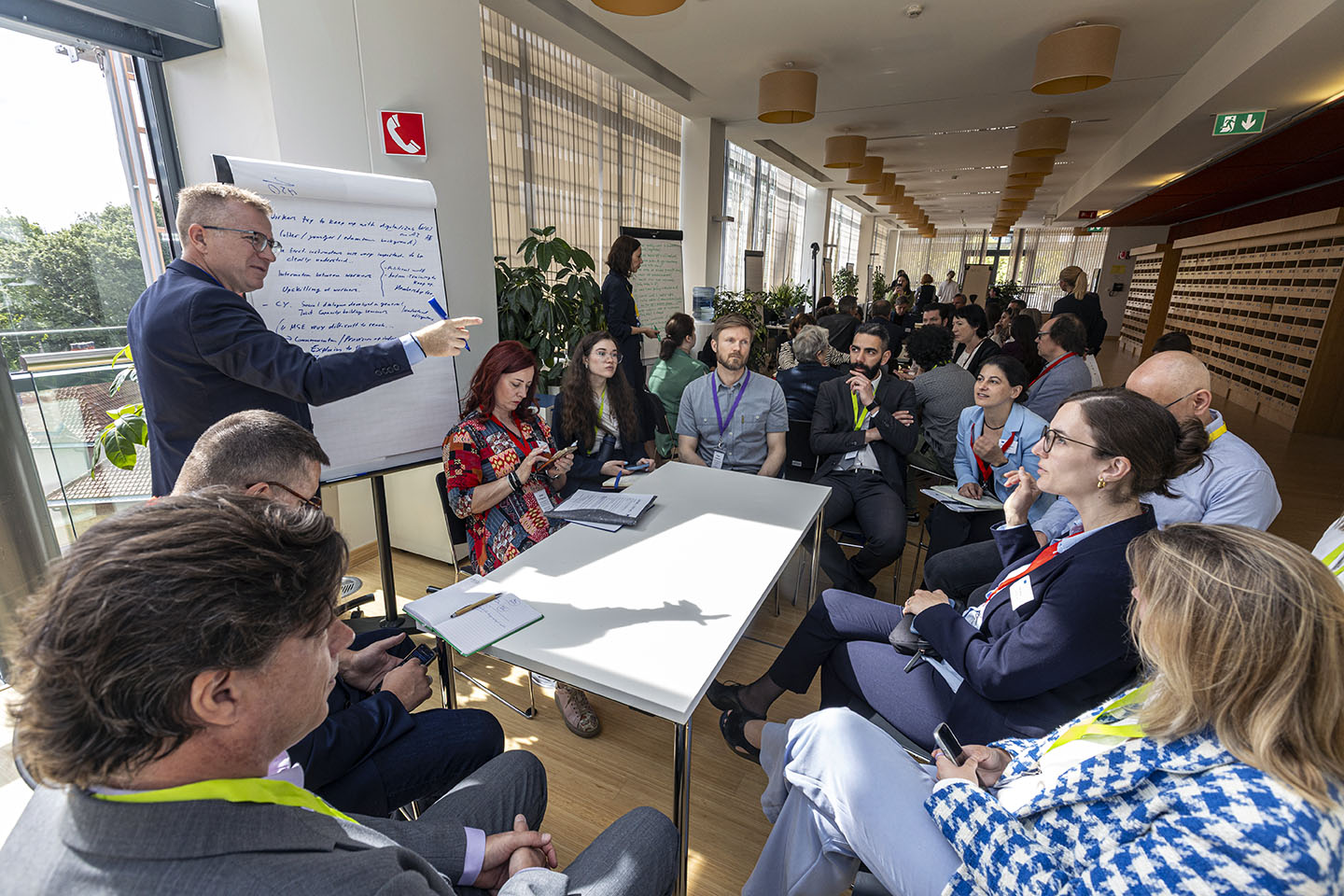
The concluding session on day three also set the tone for the work to follow after the Tripartite Exchange Seminar's residential event in Brussels, with participants split into thematic groups and asked to design a roadmap for how they intend to pursue their plans and realise their ambitions following the residential seminar.
Speaking to this point, Rebecca Sunnus, Social Policy Expert and Member of the EESC, stated, “the challenge really begins when seminars like these conclude. This is when we must remain connected and build communities of practice in which diverse voices may be heard. Europe’s strength will never rely on simply having the latest technology. Europe’s strength lies in our efforts to combine innovation with social values. The AI transition will be successful not only if it is efficient – it will be successful if people trust it, benefit from it, and feel they have a voice in shaping it.”
Pavel Trantina, Vice-President of Evropské hnutí v České republice (European Movement Czech Republic), highlighted the importance of civil society’s role in enhancing public trust through partnerships and consultation with voluntary and youth organisations, which is especially relevant when seeking to resonate with younger generations.
“It’s not a question of whether social dialogue and digitalisation are compatible,” Trantina stated. “It’s whether we can afford to design digital futures without such strong social partnerships in place.”
Echoing these sentiments, Liina Carr, Policy Advisor at DG EMPL, reminded participants of the importance of social dialogue within EU law, the Treaties, and indeed, the enlargement process through the Commission’s annual enlargement reports. She reasserted the institutions’ responsibility to harness technological change and ensure digitalisation benefits workers and society at large, not just corporate or commercial interests.
Quoting former ITUC General Secretary Sharan Burrow, Carr stated, “the digital transition is not a force of nature – it is a political choice. We can choose to build a future that works for everyone, or one that leaves millions behind.”
To conclude the residential session, Cinzia Del Rio, President of the Section for Employment, Social Affairs and Citizenship (SOC) at the EESC, also took the floor. She reiterated the importance of the “human in control” principle as we progress towards workplaces and societies in which AI and digital technology are increasingly integral. She appealed for “participatory AI” and a world in which humans are not mere “passive” agents.
“Human dignity is, above all, our priority,” Del Rio stated. “To preserve a level playing field at EU level, we must set up a common European framework, beyond the fragmented approaches we see today. Effective social dialogue and collective bargaining are key. While increased productivity is welcome, these gains must be shared.”
Indeed, if social partners are to meaningfully engage in processes that usher in a just transition, they too will need to be equipped with the knowledge, capacity and timely access to information required to make this happen.
TES 2026 will conclude on 9 December, with an online follow-up session for all participants.
Did you like this article? If you would like to be notified when new content like this is published, subscribe to receive our email alerts.