
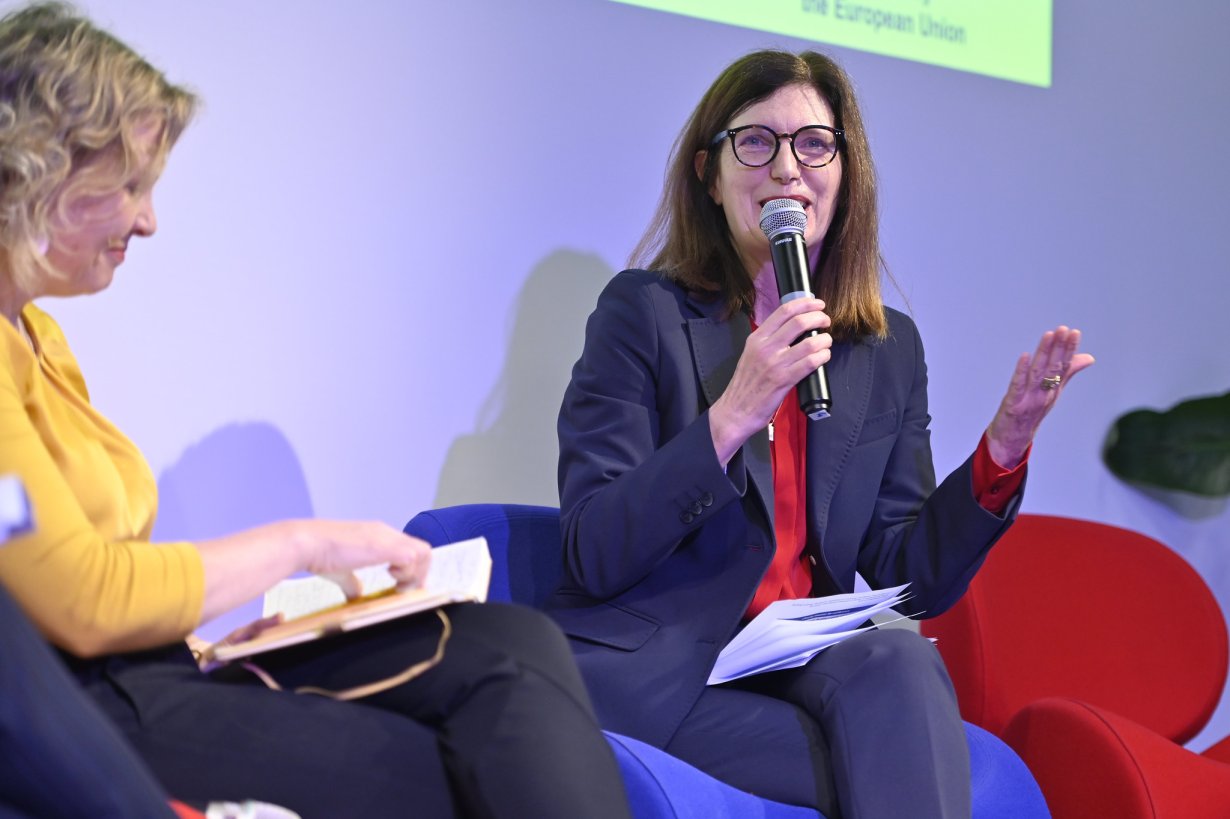
Manuela Geleng: a timely conversation on vocational excellence
“It is really time to have vocational education and training recognised as a central part of our employment and lifelong learning systems in order for us to tackle today's challenges."
In the corridors of EU policymaking, Manuela Geleng is a prominent and influential figure. As the Director for Jobs and Skills at the European Commission's Directorate-General for Employment, Social Affairs, and Inclusion, she is at the forefront of reshaping vocational education and training. Her insights play a vital role in steering the EU's policies towards a future where vocational skills are not just necessary but celebrated.
Redefining vocational education
"Vocational education and training," Manuela Geleng begins, "was once stuck in the shadow and often seen as the last resort for many." She describes a vision where 'vocational excellence' isn't just a policy term, but a powerful force for change. Now we are in an era where vocational routes are the way forward for many professions, particularly those stemming from the digital and green transitions. "These are not the old-fashioned jobs of yesterday," she asserts, "but rather roles that are carving out the future."
Stronger together
Discussing the international dimension of vocational excellence, Manuela Geleng emphasises a collective journey. The EU's role in this is not insular; the EU has always been multilateral in its approaches, and has promoted cooperation at regional level, as can be also seen in the recently published enlargement package proposed at the beginning of November. "Collaboration," she notes, "isn't just beneficial, it's essential." She references the wisdom of sports legend Roger Federer: "You cannot be alone at the top." This philosophy also underpins the EU's collaboration with organisations like the ILO and the OECD as well as EU agencies like the ETF and initiatives such as Erasmus+.
Navigating excellence
The conversation shifts to the strategic importance of tools like ISATCOVE (a new international self-assessment tool targeting centres of vocational excellence) and support services for centres of vocational excellence. Manuela Geleng sees these as more than mere assessment tools; they are the compasses guiding the transformation of vocational training. "They show us where we excel and where the journey is still tough," she explains. By recognising progress and highlighting blind spots, she sees these kinds of assessment as a potential way of transforming vocational training across Europe and beyond. Such insights are essential in a landscape where vocational training is rapidly evolving to meet new economic and social demands.
Beyond the European Year of Skills
As the European Year of Skills progresses, Manuela Geleng is mindful about its legacy. "It's not about leaving a legacy per se," she explains. "It's about recognising that the need for skills development is a constant." In this context, the ETF's role is not just supportive but foundational, continuously adapting and responding to the changing tides of labour market needs and societal expectations.
In conclusion, Manuela Geleng reiterates the importance of vocational training in the modern European narrative. It's a story of continuous adaptation, a tale where every twist and turn is met with innovation and collaborative spirit. With leaders like Manuela Geleng at the helm, vocational training in Europe is not just surviving; it's thriving, ready to meet the challenges of today’s transforming world.