
Torino Process: The role of regions and cities
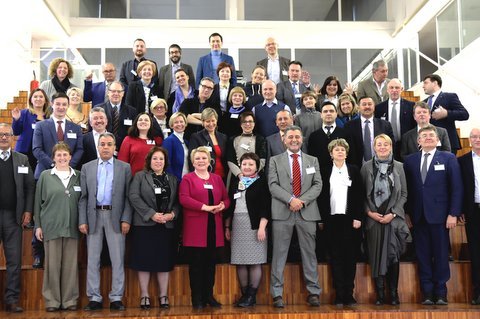
The evolution of the European Training Foundation's flagship programme, the Torino Process, is in the spotlight as delegates from 31 regions and cities meet in Turin to discuss progress over two days of focus group meetings, 27-28 February.
Opening the Regions and Cities for VET and Skills Development conference, ETF Director Cesare Onestini said the event offered an opportunity to reflect on how to make the next round of the Torino Process even more useful, exciting and further into the reform process.
'The Torino Process is like a tree - as Manuela likes to say,' Mr Onestini said, paying tribute to Manuela Prina, the ETF's outgoing Torino Process coordinator. 'A seed was planted and now we have many branches.'
Those regional branches were now 'growing strong and flowering' and should soon produce fruit, he added. 'When we move to the sub-national level, we are really talking about implementation; about making things happen, trying to find ways in which we translate the bigger ideas we have in the country and internationally to see what it means in practice,' Mr Onestini said, adding: 'That dimension is very close to the core of our objectives.'
The ETF's Abdelaziz Jaouani, who is taking over as Torino Process coordinator, said the regional dimension was growing fast, which was 'a good thing in terms of ownership and multi-level governance.' In the programme's next round - which is due to launch in 2019 - there are likely to be as many as 50 or more regions involved, he added.
The expansion of the Torino Process - the ETF's evidence-based skills training policy monitoring and support system - to the sub-national level during its last two-year round, 2016-17, is the latest development in a programme first launched eight years ago.
In the last round, 25 of the ETF's 29 partner countries produced national reports presenting the detailed results of intensive monitoring and evaluation of progress over the previous two years in the development of their vocational education and training systems. In parallel to that, 31 regions from four of those countries replicated that analysis at the local level.
The shift from national, top-down analysis to a more collegial approach at the regional level that brings the analysis of VET systems much closer to the chalk-face, reflects a growing understanding of the need for deeper policy analysis and the added value it brings to those involved in the nitty-gritty of implementing skills training.
By involving regional administrators, social partners, VET providers, business and civil society and other stakeholders in such policy analysis and monitoring, a greater understanding of the needs and potential for skills development and job creation appropriate to the local level can be built.
Participants represent Azerbaijan, Belarus, Bosnia and Herzegovina, Kazakhstan, Morocco, Russia, Tajikistan, Tunisia, Ukraine and Uzbekistan.
Did you like this article? If you would like to be notified when new content like this is published, subscribe to receive our email alerts.