
From Frameworks to Practice: Montenegro Boosts Employment and Skills Reforms on Its Path to the EU
As Montenegro moves closer to European Union membership, the focus is shifting from adopting legislation to delivering reforms that make a tangible difference for its citizens.
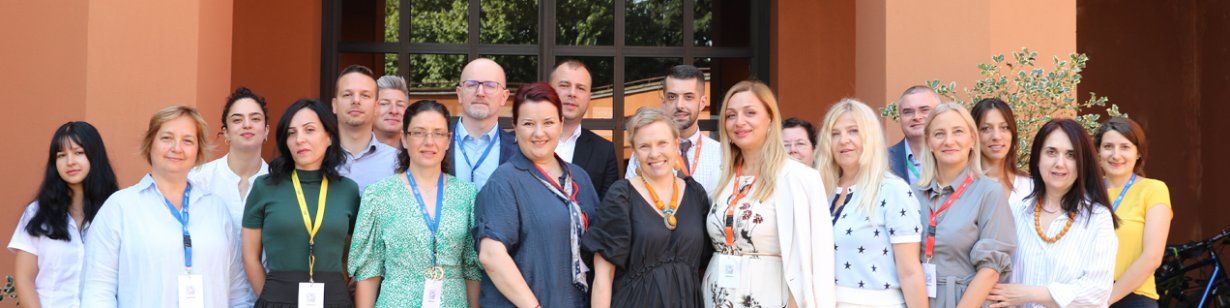
The event brought together representatives from the Ministry of Labour, Employment and Social Dialogue, the Employment Agency of Montenegro, the European Training Foundation (ETF), and experts from Poland, Ireland, Greece and Italy to discuss enhancing Montenegro’s alignment with EU practices in employment and skills areas.
Organised in support of Montenegro's preparations for EU accession, the event provided an opportunity to exchange experiences on strengthening employment services, improving labour market policies and preparing for key European tools – such as ESCO (European Skills, Competences, Qualifications and Occupations) and EURES (European Employment Services). Throughout the discussions, one message was clear: successful EU integration depends on both adopting European legislation and building national institutions capable of delivering quality services with better opportunities for its citizens.
Representatives of Montenegro's Ministry of Labour emphasised that the country's next challenge focuses on effective implementation of legislation and policies.
"Our priority is no longer only adopting legislation and strategic documents," said Ivana Šućur, Director General, Ministry of Labour, Employment and Social Dialogue. "Our priority is to ensure that these reforms are effectively implemented and translated into tangible results for our citizens, workers and employers."
ETF’s Director, Dr Pilvi Torsti congratulated the Montenegrin team on closing the negotiations for the chapter 2 of the acquis communautaires covering topics of free movement of workers, bringing the closed negotiating chapters to 16 and making Montenegro one of the most advanced candidate country in the EU accession process.
"I reiterate the strong commitment of ETF to support Montenegro on the ‘final stretch’ towards EU accession and implementation of growth, education and employability reforms," stated Dr Pilvi Torsti, Director, European Training Foundation (ETF). "The EU support, including the Reform Agenda, are strategic opportunities to modernise employment services, strengthen skills systems and improve social inclusion."
Participants acknowledged the progress Montenegro has already made during its accession journey while recognising that strengthening administrative capacity remains a priority. It was noted that, although the necessary knowledge exists, limited staffing remains a challenge. As a result, the need for external guidance and support, and for building stronger in-house expertise within national institutions was highlighted.
A central topic of the event was the modernisation of Montenegro's Public Employment Service. Discussions focused on improving the country's jobseekers' profiling system, enabling employment advisers to better understand individual needs and connecting people with appropriate training and employment opportunities. Participants agreed that reliable data, skilled counsellors and personalised supports are essential for effective labour market services.
The event also explored Montenegro's preparations to implement ESCO and to exchange data with the EURES network. These initiatives will strengthen labour market matching, improve interoperability with European employment services and support worker mobility across Europe.
Particular attention was given to the Youth Guarantee and the challenge of reaching young people who are not in employment, education or training (NEETs). ETF experts stressed that successful employment policies require closer cooperation between education, employment, youth and social inclusion services.
"We need to move beyond a simple employment-focused approach," said Florian Kadletz, Human Capital Development Expert, European Training Foundation (ETF), "A multi-policy approach involving education, employment, youth and social inclusion is essential."
Learning from the experience of EU Member States was another key element of the programme. Representatives from Poland shared lessons from implementing employment measures supported by the European Social Fund Plus (ESF+). They highlighted the importance of strategic planning, flexible implementation and cooperation with regional authorities, employers and civil society.
Łukasz Mikulec, Head of Labour Market and Social Inclusion Unit, Poland's Ministry of Development Funds and Regional Policy explained "Granularisation is the key when implementing reforms using the financing not linked to costs scheme or other simplified financing. Small steps make reforms easier, more flexible, and better adapted to people's needs."
Participants also discussed lifelong learning, career guidance and Montenegro's ongoing work to develop micro-qualifications and to better recognise people's skills throughout their careers. As labour markets continue to evolve through digitalisation, demographic change and the green transition, these reforms will play an increasingly important role in supporting workers and employers alike.
The programme also included a study visit to Italy's Autonomous Region of Valle d'Aosta, where the Montenegrin delegation explored how regional authorities implement EU-funded employment and vocational education programmes. The visit focused on the value of cooperation between regions facing similar geographical and labour market challenges, and reinforced the importance of exchanging practical experience.
"It is easier to pursue common goals by strengthening one another, sharing best practices, and jointly building a vision of Europe that values local distinctiveness and the unique differences each territory can express, rooted in its own history, developing its potential and projecting it into the future," said Gianni Nuti, Head of the Labour and Training Policies Unit, Autonomous Region of Valle d’Aosta. "Valle d’Aosta hopes that this meeting will be the first in a series, aimed at building a strong alliance, capable of vision and of planning together in service of the respective communities to which we belong, while also strengthening the European Union as a whole.
Concluding the discussions, experts agreed that successful reforms depend not only on meticulous policies, but also on strong institutions, reliable data and effective partnerships.
"Having good quality data and the expertise to develop a statistical profiling model is very important," acknowledged Dr Elish Kelly, Senior Research Officer in the Economic Analysis Division, Economic and Social Research Institute (ESRI). "The effectiveness of the profiling tool, and, more broadly, active labour market programmes, depends on how well people are classified and how individual support plans are developed to respond to the needs of the jobseeker.
The event reaffirmed that Montenegro's path towards EU membership is about aligning with European frameworks, and investing in people, while strengthening institutions and building partnerships that will create better employment opportunities for future generations.
The European Training Foundation (ETF) will continue its efforts to support Montenegro’s administration in strengthening institutional capacity and advancing reforms in line with European Union requirements, thereby accelerating progress towards EU accession.
Did you like this article? If you would like to be notified when new content like this is published, subscribe to receive our email alerts.