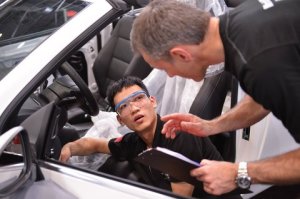
Supporting teachers so that they are up-to-date with the latest professional developments, guaranteeing students the appropriate facilities and tools to get ready for the labour market, maintaining close cooperation with entrepreneurs to assess the companies’ needs track from school to work.
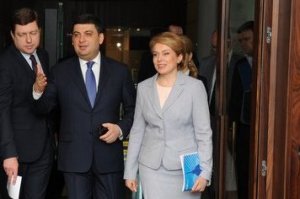
Ukraine is in dire need of a qualified workforce. Addressing skills needs, anticipation and matching will be supported through the quick establishment of Regional VET Councils.
Four Balkan countries and Turkey are joining forces in Budva (Montenegro) on 26-27 October to strengthen the quality of apprenticeships and increase the employability of young people.
Early identification of the qualifications and skills of migrants and displaced people supports their labour market integration and social inclusion. The ETF's qualifications team has developed a flow chart that visualises routes towards labour market integration, designed to help coordinate activities in this field.
The future of vocational skills was centre stage at the 2017 World Skills conference in Abu Dhabi. The ETF joined the global skills community to discuss challenges and opportunities posed by the fast-changing world of work.
This is a paradigm of data visualisation, the presentation of data made easier and understandable through the use of a pictorial or graphical format. With this assumption representatives from Kazakhstan, the Kyrgyz Republic, Tajikistan and Uzbekistan gathered in Torino, at the ETF, to discuss how to use evidence to impact the policy-making in the fields of higher education and vocational education and training.
Youth unemployment is high in Bosnia and Herzegovina, with around 7 in 10 young people out of work. Faced with an uncertain future, many graduates are leaving the country to find work. For these young people, having their skills, competencies and qualifications easily recognised is essential.
Meet Sadah - she's ambitious! ‘In 10 years’ time, I will have my own supermarket,’ the Vocational Training Centre graduate, and trainee shop assistant in Jordan says.
Knowledge hubs – platforms that bring together employers, educators and governments – are supporting skills development in Serbia's fast-growing ICT sector. Senior ministers, EU officials, business leaders, educators and ETF experts have been meeting in Belgrade to discuss how the success of the Vojvodina ICT Cluster can be replicated to address skills shortages in other sectors.